





Why TZM Alloy Is Ideal for High-Temperature Usage
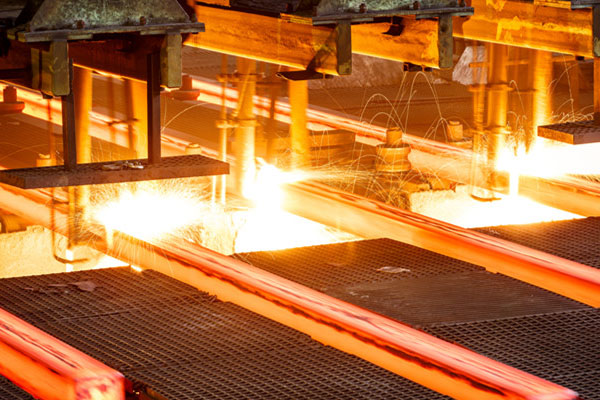
The TZM alloy is a molybdenum alloy containing small quantities of titanium, zirconium, and carbon. It is renowned for its outstanding properties when subjected to high temperatures. The main areas of application of the TZM alloy include the aerospace industry, furnaces, and high-precision manufacturing. The material is used whenever high temperature resistance and reliability are needed.
Notable Strength Where It Matters
Even at room temperature, TZM has a higher strength than pure molybdenum, so it is useful for structural parts that have to support stress without bending or breaking. Another characteristic of TZM is that its elongation capacity is lower than that of pure molybdenum, although it has higher strength.
What makes TZM so special, though, is how it handles as the temperatures increase. Whereas pure molybdenum will lose its strength at around 1200°C, TZM will retain its potent strength of 320-360 MPa. It will even maintain 140-170 MPa at temperatures as high as 1400°C. Allow me to stress that again – at temperatures of 1400°C, it will maintain its strength at 140-170 MPa.
High Temperature Stability
The microstructure of TZM is strengthened by the presence of small particles that make it more resistant to the effects of high temperatures. As a result, TZM has a higher recrystallization temperature than molybdenum, which is around 1350°C compared to molybdenum's 850°C. The implication is that TZM maintains its mechanical strength for a longer period than molybdenum.
Related reading: TZM Alloy vs Pure Molybdenum
Reducing Oxidation
As is the case for other metals, TZM is prone to oxidation when heated in the presence of air. As a result, the material can readily undergo a chemical reaction with the oxygen present on its surfaces and deteriorate. Nevertheless, as a result of appropriate alloying or the creation of a barrier through the application of TZM coatings, its shelf life can greatly improve.
High Performance Creep & Bending Strengths
With high tensile strength and high temperature resistance to bending compared to molybdenum, TZM has excellent creep strength, which suits it for high temperature mold production and aerospace applications. However, it must be noted that all materials possess limitations with respect to their creep strength at high temperatures or under high cyclic loading. Understanding these limitations is critical for engineers to design components that provide continued safety during prolonged periods of operation.
High-Temperature Fatigue Resistance
In industrial or aerospace environments, the components can be subjected to constant cycles of heating and cooling, potentially causing fatigue. However, TZM can be expected to work properly in such conditions. As stress goes higher, the fatigue life goes down, but it will still be in good strength/toughness proportion.
Key Physical Benefits
TZM has low density for a refractory material, with high melting points and high thermal conductivity. It has low thermal expansion, implying that it does not change shape significantly when it is heated or cooled. Here is a quick overview of some of its properties:
|
Property |
TZM Alloy Data |
|
Density (g/cm³) |
10.22 |
|
Melting Point (°C) |
2617 |
|
Boiling Point (°C) |
4612 |
|
Elastic Modulus (GPa) |
320 |
|
Yield Strength (MPa) |
560–1150 |
|
Tensile Strength (MPa) |
685 |
|
Fracture Toughness (MPa·m¹/²) |
5.8–29.6 |
|
Electrical Resistivity (Ω·m) |
(5.3–5.5)×10⁻⁸ |
|
Thermal Conductivity (W/m·K, 20–100°C) |
126 |
|
Thermal Expansion Coefficient (K⁻¹) |
5.3×10⁻⁶ |
|
Maximum Working Temperature (°C) |
400 |
These qualities make TZM both robust and useful because they combine the strength required for heat resistance with stability.
Potential Applications of TZM
Because of its high strength, high stability, and high temperature resistance, applications for TZM include fields where failure is not and cannot be tolerated by applications. Aerospace engineers use it for engine parts and supporting structures within engines. Industrial engineers require it for furnace components, electrodes, and high temperature molds. TZM improves performance in high temperature application areas such as nuclear power and energy applications.
Conclusion
TZM alloy is far more than a high-temperature metal. It is an answer to industries that require reliability, ruggedness, and durability in high-heat environments. Property requirements of high tensile strength, creep, and fatigue life make it nearly perfect for aerospace, general industrial, and high temperature manufacturing. For design engineers, it is an answer that gives them confidence in that it will stand up to high temperatures. For more high temperature materials, please check Advanced Refractory Metals (ARM).
REVIEWS
{{viewsNumber}}
Thought On "{{blogTitle}}"

{{item.name}}
{{item.created_at}}
{{item.content}}
LEVE A REPLY
Comment
Name
*
Email
*
{{item.children[0].name}}
{{item.children[0].created_at}}
{{item.children[0].content}}
{{item.name}}
{{item.created_at}}
{{item.content}}
More Replies
LEAVE A REPLY
Comment
*
Name
*
Email
*
SUBSCRIBE OUR NEWSLETTER
Your Name
*
Your Email
*
Success ! You're now subscribed
You've been successfully subscribed! Check your inbox soon for great emails from this sender.
Our Latest News
Tel : (949) 407-8904
Address : 1940 East Deere Avenue, Suite 100, Santa Ana, CA 92705, U. S. A
Metals

Useful Links
Featured Posts