





Common Types of Heating Elements: What You Want to Know
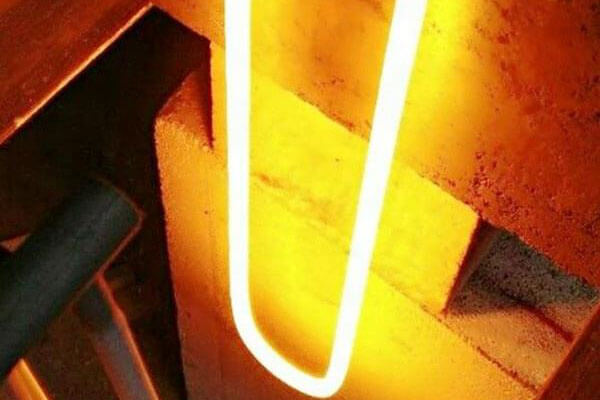
Heating elements are very important in many fields, ranging from domestic to industrial applications. It could be a toaster, which is very straightforward, or a furnace in a metallic production plant, but a heating element always has one job: to change electrical energy into heat energy through resistance. The material selection for a heating element plays a very important role in determining its efficiency and safety.
Which Properties Are Most Critical for Selecting Heating Element Materials?
The choice of material used in the heating elements is determined by a number of key attributes. The following are the most crucial materials attributes:
- Thermal Stability: The function of the components at higher temperatures should not get hampered. This becomes an important consideration in applications where high-temperature processes have to be carried out.
- Electrical Resistivity: The measure that gives an indication of a material's ability to resist an electric current has a direct effect on the quantity of heat that flows from a surface. Higher resistivity materials are generally required in applications involving heating because they can effectively convert electricity into heat.
- Resistance to Oxidation: The common operating environment for most heater elements is oxygen-saturated, which causes possible oxidation of the element material. Solid resistance to oxidation will ensure longer element lifetime, especially when operating in air or in a furnace at higher temperatures.
- Mechanical Strength: Applications may have to endure mechanical stresses, like the need to bend without necessarily breaking. High tensile strength is required for heating elements in heavy industry where the risk of vibration or physical damage may be likely.
What Materials Are Used for Heating Elements?
In the selection of the appropriate material for the heating component, the most essential considerations include stability, resistivity, and oxidation resistance respectively, and it seems that the following classification, based on material type, brings clarity through categorization:
1. Metal Alloys Used as Heating Elements
Nickel-chromium alloys, also known as nichrome, and iron-chromium-aluminum alloys, also known as FeCrAl, are the most widely used materials for the production of heating elements. Such materials are highly preferred because of their good oxidation resistance and higher temperature properties.
Nickel-Chromium Alloy (Nichrome)
Nichrome is widely used as the heating element material and contains nickel and chromium as the major constituents. This material possesses good electrical resistivity and can work well in temperatures of up to 1,200°C (2,192°F). Nichrome has the advantage of resisting the effects of oxidation when in open air, so it serves as an ideal material for many uses.
Nichrome is widely used in household appliances such as toasters, hair dryers, and space heaters. Additionally, industrial furnaces and ovens use this material.
Nichrome has good oxidation resistance properties up to 1,200°C, along with strong mechanical properties and flexibility, which helps it have a long life span. The properties of Nichrome begin to decay when the temperature exceeds 1,200°C, and it tends to become brittle when subjected to mechanical stresses.
Iron-Chromium-Aluminum Alloy
FeCrAl alloys are known to resist higher temperatures than nichrome with upper operating temperature limits up to 1,600°C (2,912°F). Oxidation resistant and capable of withstanding harsh environments, FeCrAl alloys are made up of iron, chromium, and aluminum.
These are used in industrial heating in furnaces, kilns, and in processing of ceramics in FeCrAl heating elements.
FeCrAl alloys have better oxidation resistance at higher temperatures and hence a longer life when operating at higher temperatures. They are more resistant to higher temperatures compared to nichrome. But they are more brittle compared to nichrome and tend to fail if subjected to cyclic heating and cooling.
2. Refractory Metal Heating Elements
Refractory metals might include molybdenum and tungsten. Refractory metals are used where high-temperature conditions prevail. For example, they would be used where the temperature exceeds the limit of the ordinary alloys.
Molybdenum Heating Elements
Molybdenum is also known as a refractory metal, with a high melting point of about 3,200˚C and 5,792˚F. This means that molybdenum elements can be used at high temperatures without degrading. They are generally good at high temperatures where oxidation can be avoided.
Molybdenum heating elements have wide applications in vacuum furnaces, as well as in semiconductor devices, which demand strong thermal stability and precise control.
Molybdenum elements for heating have good performance qualities at high temperatures, with high mechanical strength and low thermal expansion, making them suitable for applications above 2,000°C. The weakness with this material lies in its susceptibility to oxidation when the atmosphere is rich with oxygen, requiring it to be heated either in a vacuum environment or controlled atmosphere. It is relatively pricey compared to others such as Nichrome and FeCrAl.
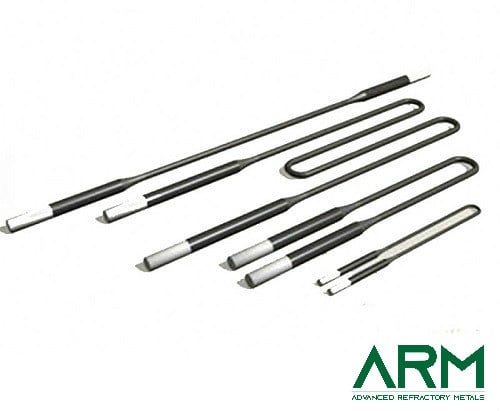
Molybdenum Disilicide Heating Element
Molybdenum disilicide is a compound composed of both molybdenum and silicon, which is highly resistant to temperatures above 2,000 degrees Celsius (3,632F). MoSi2 is commonly used when high temperature and oxidation resistance are both required.
Such a material is commonly used in high-temperature uses like metal working, growing crystals, and sintering in the ceramic industry.
Molybdenum disilicides have good high-temperature resistance up to 2,000°C and are resistant to oxidation in controlled atmospheres. They are, however, brittle and prone to breaking due to mechanical stress, and oxidation can be arrested only in controlled atmospheres.
3. Other Specialty Materials for High-Temperature Heating Elements
Aside from the common alloys and refractory metals, there are other special materials presently employed for particular uses at higher temperatures. One of these special materials is silicon carbide, or SiC, which has good thermal shock resistance and can work at temperatures as high as 1,700°C (3,092°F).
Related reading: Heating Elements: Molybdenum Disilicide vs. Silicon Carbide
Comparison Table: Various Heating Elements
|
Material |
Maximum Temperature |
Oxidation Resistance |
Mechanical Strength |
Cost |
Applications |
|
Nichrome (NiCr) |
1,200°C (2,192°F) |
Excellent |
Good, but brittle under stress |
Moderate |
Household heaters, industrial furnaces |
|
FeCrAl |
1,600°C (2,912°F) |
Superior |
More brittle than nichrome |
Moderate |
Industrial heaters, kilns |
|
Mo Heating Elements |
2,000°C (3,632°F) |
Good (needs controlled atmosphere) |
Excellent at high temperatures |
High |
Vacuum furnaces, semiconductor processing |
|
MoSi2 Heating Elements |
2,000°C (3,632°F) |
Good (needs controlled atmosphere) |
Fragile under mechanical stress |
High |
Metal processing, crystal growth |
|
SiC Heating Elements |
1,700°C (3,092°F) |
Excellent |
Brittle, susceptible to stress |
High |
Gas turbines, heavy-duty furnaces |
For more details, please check Advanced Refractory Metals (ARM).
Frequently Asked Questions
- What is the maximum temperature that nichrome heating elements can withstand?
Nichrome can withstand temperatures of up to 1,200°C (2,192°F) before the performance
- Why are FeCrAl alloys better than nichrome when working at higher temperatures?
FeCrAl alloys have high resistance to oxidation and thermal stability, and therefore can resist temperatures up to 1,600°C (2,912°F).
- Why are molybdenum heating elements preferred at high temperatures?
Molybdenum can resist temperatures above 2,000 °C with high thermal stability, although it needs to be under a protective atmosphere to avoid oxidation. Furthermore, this component can be prone.
REVIEWS
{{viewsNumber}}
Thought On "{{blogTitle}}"

{{item.name}}
{{item.created_at}}
{{item.content}}
LEVE A REPLY
Comment
Name
*
Email
*
{{item.children[0].name}}
{{item.children[0].created_at}}
{{item.children[0].content}}
{{item.name}}
{{item.created_at}}
{{item.content}}
More Replies
LEAVE A REPLY
Comment
*
Name
*
Email
*
SUBSCRIBE OUR NEWSLETTER
Your Name
*
Your Email
*
Success ! You're now subscribed
You've been successfully subscribed! Check your inbox soon for great emails from this sender.
Our Latest News
Tel : (949) 407-8904
Address : 1940 East Deere Avenue, Suite 100, Santa Ana, CA 92705, U. S. A
Metals

Useful Links
Featured Posts