
Main Products
{{total}} Products
{{item}}


Indium is a highly ductile and silvery-white rare metal with a bright luster. It is a single crystal with no pores and is used in ITO film, solder in electronic industry, sealing element in low temperature and vacuum area, solubility anode.
Advanced Refractory Metals is a leading supplier of indium products. We offer competitive pricing and great lead times on all our materials, and we’re capable of supplying custom materials per any specs/drawings you provide us with.
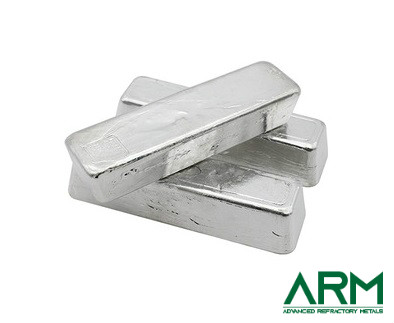
• Symbol: In
• Atomic Number: 49
• Atomic Weight: 114.818
• Element Category: Post-Transition Metal
Indium is a soft, silvery-white metal known for its low melting point (156.6°C), exceptional malleability, and ability to wet glass, ceramics, and many metals. Its chemical behavior is similar to gallium, but indium offers significantly better ductility and bonding reliability, especially in delicate electronic assemblies. Indium is also the foundation of indium tin oxide (ITO), one of the world’s most important transparent conductive materials used in displays and touchscreens.
Forms Available:
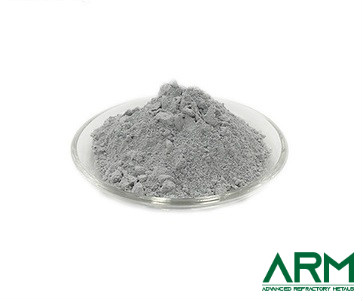
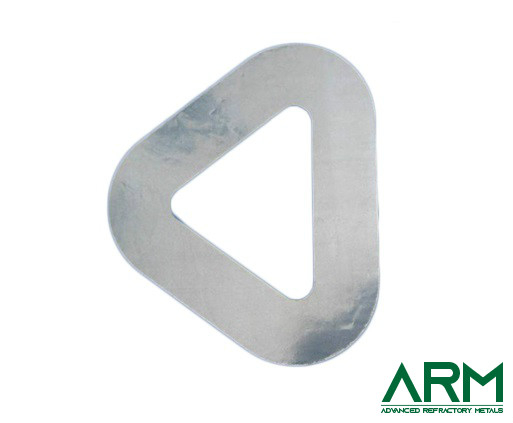
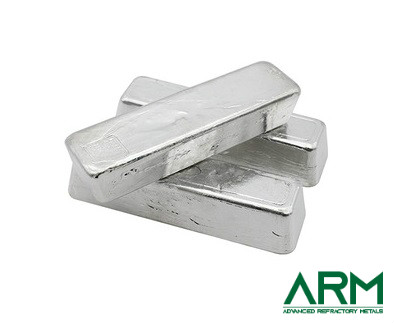
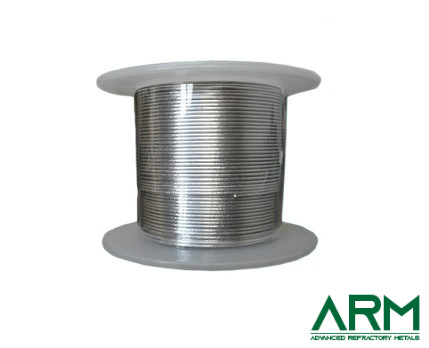
Ingot, Foil, Sheet, Strip, Wire, Ribbon, Shot, Powder, Custom Shapes
• Low Melting Point: 156.6°C (313.9°F)
• Highly Ductile and Soft – easily formed without cracking
• Excellent Wetting Properties – adheres well to glass, ceramics, and metals
• Superior Low-Temperature Performance – remains pliable at cryogenic temperatures
• Forms Hermetic Seals for vacuum systems and optical devices
• Good Electrical and Thermal Conductivity
• Non-Reactive and Oxidation Resistant
• Ideal for High-Purity Electronic and Semiconductor Applications
Indium is widely used across electronics, semiconductors, thermal management, and sealing technologies. In electronics, indium serves as a key material for solders, bonding, and interconnects due to its softness and strong wetting behavior. It is essential for ITO coatings used in displays, LCD panels, and touchscreens, providing both transparency and electrical conductivity.
In the semiconductor industry, high-purity indium is used for wafer bonding, thin-film deposition, and compound semiconductor production, including InGaAs and InP technologies.
As a thermal interface material, indium foil, wire, and preforms deliver superior heat transfer between chips, modules, and heat sinks, especially where long-term mechanical stability is required.
Indium is also widely used in vacuum sealing, cryogenic systems, and precision optical devices, where its ability to form soft, conformal, leak-tight seals is unmatched. In metallurgy, indium is alloyed to improve corrosion resistance, modify melting behavior, and enhance mechanical performance in specialized industrial materials.
1. Do you offer custom sizes or shapes?
Yes. Indium foil, sheet, wire, preforms, and alloy products can be produced to custom dimensions and tolerances.
2. What industries commonly use indium?
Electronics, semiconductors, display manufacturing, aerospace, cryogenics, optics, vacuum systems, and thermal management.
3. Why is indium used for vacuum or cryogenic seals?
Its softness and ability to cold-flow create tight, reliable seals even at very low temperatures and without high forces.
4. Do you offer high-purity indium for semiconductor applications?
Yes. Semiconductor-grade and zone-refined indium are available upon request.
5. Can indium be used as a thermal interface material?
Absolutely. Indium foil and preforms provide excellent heat transfer and maintain long-term contact integrity, outperforming greases in critical electronics.
6. What forms of indium are best for soldering or bonding?
Indium wire, strip, and low-melting indium alloys are widely used for soft soldering, die bonding, and electronic interconnects.