





Top 7 Applications of Tantalum Wire
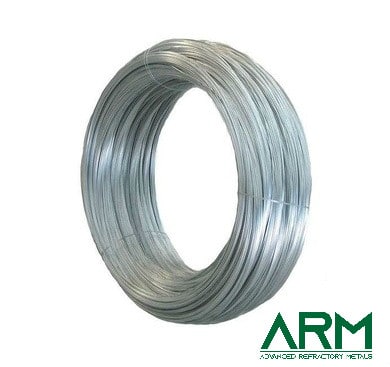
Tantalum is a refractory metal with an extremely high melting point (2,996°C), excellent corrosion resistance, and good biocompatibility. Among all metals, its melting point ranks fourth, behind only tungsten, rhenium, and osmium. When drawn into thin wire, tantalum wire keeps its mechanical strength, resists chemical attack like a champ, and handles cold working really well.
As the saying goes, properties drive applications. Thanks to its outstanding characteristics, tantalum wire is widely used in seven major areas.
|
Property |
Application |
|
Excellent mechanical strength + resistance to strong corrosives like chlorine and bromine |
Corrosion-resistant springs in the chlor-alkali industry |
|
Resists high-temperature grain growth and bending fatigue |
Anode leads for tantalum capacitors |
|
High melting point + good workability |
Metal 3D printing |
|
Chemically inert to body fluids, non-toxic, non-irritating, high radiopacity |
Surgical medical markers |
|
High purity, evaporates evenly |
Vacuum coating evaporation pellets |
|
High melting point, high-temperature strength, decent resistivity |
Heating elements for vacuum furnaces |
|
High ductility, good gas absorption (gettering) at high temperatures |
Lamp filaments, internal structures of electron tubes and X-ray tubes |
1. Corrosion-Resistant Springs in the Chlor-Alkali Industry
One of the most impressive uses of tantalum wire is as springs in chlorine regulators and chlorinators. The chlor-alkali industry deals with highly corrosive stuff like chlorine and bromine gas. Regular metals just can't keep their mechanical properties over time. To solve this, engineers developed a tantalum-tungsten alloy called Tantaloy 61 (92.5% tantalum, 7.5% tungsten) for making springs. This alloy laughs off chlorine, bromine, and pretty much every inorganic acid except hydrofluoric acid. Even under vacuum and after thermal cycling up to 1,315°C, it still holds its dimensions, stays strong, and keeps its springiness. That unique combo of mechanical strength and corrosion resistance makes tantalum wire the go-to material for critical parts like chlorinator valve springs. You'll find them in chlorine disinfection equipment for water and wastewater treatment, and they come with a lifetime warranty.
Corrosion-Resistant Springs
2. Anode Leads for Tantalum Capacitors
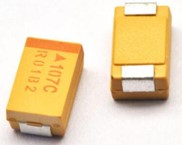
In the electronics world, the biggest use of tantalum wire is as anode leads in tantalum electrolytic capacitors. About 65% of all tantalum metal—in wire or powder form—goes into tantalum capacitors. The smallest wires can be as thin as 0.10 mm in diameter. Tantalum capacitors are often called the "best capacitors" because of their high capacitance, low leakage current, low equivalent series resistance (ESR), and long lifespan. They're widely used in telecommunications, computers, automotive, aerospace, and other high-end applications.
Anode Leads for Tantalum Capacitors
There's a tricky challenge with capacitor-grade tantalum wire during high-temperature sintering: oxygen contamination can make the wire brittle, which ruins the capacitor. Research shows that the key to preventing oxygen embrittlement is to refine the grain structure so that the grains stay thermally stable even above 1,700°C for over 30 minutes. The theoretical sweet spot is grain size ≤ 40 μm. Adding tiny amounts of elements like yttrium during electron beam melting helps refine the grain size and raise the recrystallization temperature. That way, the wire meets all the specs for mechanical strength, electrical performance, and bendability.
3. Feedstock for 3D Printing
The rapid growth of metal additive manufacturing has opened up a whole new world for tantalum wire. In directed energy deposition (DED) processes—especially electron beam additive manufacturing (EBAM)—wire is the main feedstock. Tantalum wire, along with other refractory metal wires like tungsten, molybdenum, and niobium, is on the standard list of materials for EBAM.
Compared to powder, wire feedstock has several advantages: it's typically 50% or even cheaper, easier and safer to store, and doesn't have the flammability issues you get with aluminum or titanium powders. In DED processes, refractory metals like tantalum show excellent performance and can form complex geometries. The resulting parts are nearly fully dense, and their performance meets or even beats industry standards for forged parts.
4. Surgical Medical Markers
Tantalum wire's use in medicine comes down to its excellent biocompatibility. Medical-grade tantalum wire plays nice with human tissue and body fluids. It doesn't trigger immune reactions or toxicity when implanted long-term. Tantalum also resists chemical attack from body fluids without irritating surrounding tissue, making it ideal for surgical tools and implants.
Tantalum marker bands are a great example. These small, cylindrical devices are attached to catheters, guidewires, stents, and other medical tools. Thanks to tantalum's high radiopacity, they show up as bright, high-contrast images on X-rays, CT scans, or fluoroscopy. In interventional radiology, these marker bands help doctors pinpoint blood vessels, mark tumor locations, and guide biopsy needles or surgical instruments exactly where they need to go. In orthopedic joint replacement surgery, marker bands help ensure implants are perfectly aligned. In gastrointestinal endoscopy and capsule endoscopy, they help locate lesions or abnormal areas. Because tantalum is non-toxic, non-allergenic, and incredibly stable, medical-grade tantalum wire has become the gold standard for precision navigation in interventional medicine.
5. Evaporation Pellets for Vacuum Coating
In vacuum coating and thin-film deposition, high-purity tantalum pellets are an important evaporation material. Under vacuum, tantalum and its alloys and compounds can be evaporated using an electron beam or thermal heating. The resulting vapor deposits onto various substrates to form uniform, dense tantalum films. These films are used in semiconductor devices, optical coatings, magnetic storage media, and wear- and corrosion-resistant coatings.
- In the semiconductor industry, tantalum films are used to make high-dielectric-constant Ta₂O₅ gate materials for capacitors in integrated circuits.
- In optics, tantalum films can be stacked with SiO₂, TiO₂, and other materials to create anti-reflective coatings or infrared reflective films, like protective layers on satellite solar panels.
Small pellets (e.g., φ2×2 mm, φ3×3 mm) give you a steady, even evaporation rate and minimize splashing impurities during coating, which ensures high film quality.
Tantalum is also often used with other metals like aluminum, gold, silver, and chromium to create multi-layer composite films that meet different electrical and optical requirements.
6. Heating Elements for Vacuum Furnaces
Another important use of tantalum wire is as heating elements in high-temperature vacuum furnaces. Tantalum's melting point is 2,996°C, and it can operate at temperatures up to 2,200°C. It has excellent high-temperature strength and thermal shock resistance. The resistivity of tantalum heating elements is higher than that of molybdenum or tungsten, which makes power regulation easier. Plus, tantalum is easy to cold-work, so you can draw it into thin wire and weld it into complex heater shapes. These properties make tantalum wire an ideal material for heating parts and heat shields in high-temperature vacuum furnaces.
That said, tantalum heating elements are sensitive to carbon, oxygen, and nitrogen, so they're only suitable for high-vacuum environments. And tantalum itself is pretty expensive, so it's typically used only in high-end applications with special process requirements. Even so, tantalum heating elements are still irreplaceable in research furnaces, vacuum sintering furnaces, and heat treatment equipment that need extremely high temperatures and strict atmosphere control.
7. Lamp Filaments and Getters
In electric lighting, tantalum wire has two main roles. First, tantalum is extremely ductile and easy to cold-work, so it can be drawn into very fine wire. Second—and more importantly—tantalum has a unique ability to absorb gases at high temperatures. When heated, it can absorb hundreds of times its own volume of hydrogen, and it also binds with nitrogen and carbon. That makes tantalum an ideal material for making getters. After electric light sources (bulbs, vacuum tubes, X-ray tubes, etc.) are sealed, there's often residual oxygen, water vapor, and hydrocarbons inside. These impurities accelerate metal oxidation at high temperatures and shorten bulb life. Tantalum-based getters (early versions included barium-tantalum alloys) remove residual gases through absorption or chemical reactions, effectively protecting the filament and extending the life of the light source. On top of that, high-purity tantalum wire itself is used to make incandescent lamp filaments and internal structures for electron tubes and X-ray tubes. It continues to play a fundamental role in modern electro-vacuum technology.
Conclusion
Thanks to its high melting point, excellent corrosion resistance, great mechanical strength, and good biocompatibility, tantalum wire delivers irreplaceable value in seven key applications: chlor-alkali springs, capacitor leads, 3D printing feedstock, surgical markers, vacuum coating evaporation pellets, vacuum furnace heating elements, and lamp getters. As high-end manufacturing and medical technology keep advancing, the list of applications for tantalum wire will only grow longer.
REVIEWS
{{viewsNumber}}
Thought On "{{blogTitle}}"

{{item.name}}
{{item.created_at}}
{{item.content}}
LEVE A REPLY
Comment
Name
*
Email
*
{{item.children[0].name}}
{{item.children[0].created_at}}
{{item.children[0].content}}
{{item.name}}
{{item.created_at}}
{{item.content}}
More Replies
LEAVE A REPLY
Comment
*
Name
*
Email
*
SUBSCRIBE OUR NEWSLETTER
Your Name
*
Your Email
*
Success ! You're now subscribed
You've been successfully subscribed! Check your inbox soon for great emails from this sender.
Our Latest News
Tel : (949) 407-8904
Address : 1940 East Deere Avenue, Suite 100, Santa Ana, CA 92705, U. S. A
Metals

Useful Links
Featured Posts