





Niobium in Electronics: Super Conductors, Capacitors, and More
Niobium is a very versatile refractory metal with outstanding properties, making it a vital part of present-day electronics. The superb qualities of a superconductor, high resistance to corrosion, and good combination with advanced alloys and oxides make it find application in very advanced devices, such as superconducting circuits, high-performance capacitors, and other advanced electronics. With an increasing demand for fast, efficient, and reliable electronics, niobium metal remains a very important part of present-day technology.
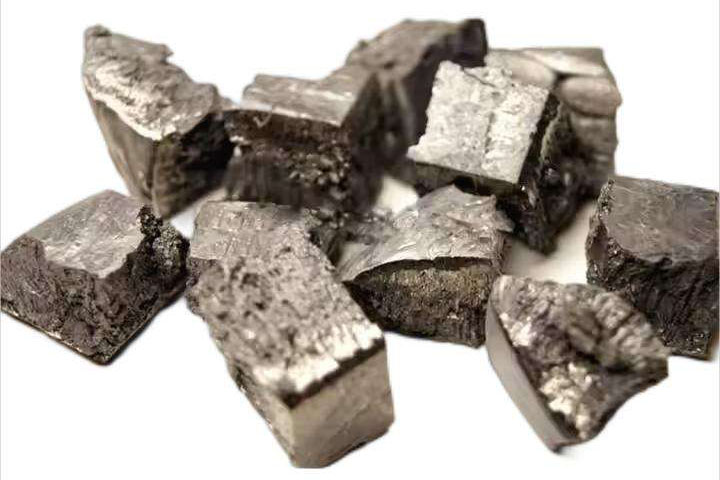
Fig. 1 Niobium Metal Ingots
Superconductors
One of the most interesting properties exhibited by niobium is its superconductivity at very low temperatures. Niobium alloys such as niobium titanium (NbTi) and niobium tin (Nb₃Sn) become perfect conductors with a strong critical magnetic field below their critical temperatures of approximately 9.2 K and 18 K, respectively. Such materials have ideal application in high magnetic field devices where a lossless transport of current is required.
In electronics, niobium-based superconductors find applications in MRI devices, particle accelerators, and SQUID sensors because of their suitability for these devices at higher magnetic fields. For instance, Nb-Ti wires in MRI devices produce a magnetic field with a strength of 3-7 Tesla with lower energy losses. Additionally, Nb₃Sn finds application in research accelerators such as the 'Large Hadron Collider' due to enhanced capability at a higher magnetic field, thus providing higher accuracy in controlling particles. Moreover, in quantum computing, niobium thin films are used in 'superconducting qubits.
Related reading: 10 Important Uses of Niobium
Storage/ Filtering Devices: Capacitors
Niobium is another important material used in high-performance capacitors, especially in niobium oxide capacitor components (Nb₂O₅). Niobium oxide capacitors are considered preferable because they have a high dielectric constant, high stability, and a high level of resistance to corrosion. Moreover, they have excellent performance compared to conventional tantalum capacitors but with far better cost effectiveness and thermal stability.
Industrially, niobium capacitors are employed in automotive electronics, telecommunications devices, and mobile devices. For instance, automotive ECUs and ABS systems employ niobium capacitors to work in a temperature range of up to 150°C without degradation. On the other hand, in smartphones and tablets, niobium capacitors are used to allow quicker charging and a stable voltage in a compact design.
Advaned Devices and Emerging Uses
Niobium is used in various other advanced devices other than in superconductors and capacitors. Niobium finds application in thin film devices due to its high melting point, resistance to chemical reactions, and low electron scattering. Thin layers of niobium are used in resonators, filters, and microwave components, where it is very important to have stability with minimal losses in thecryogenic region.
Some of the new frontiers where niobium research is being conducted include quantum computing, superconducting electronics, and cryogenic sensors. Niobium Josephson junction structures are at the core of superconducting quantum technology and have demonstrated ultra-sensitive detector capability in quantum research and medical imaging. The capacity for niobium to be used in combination with silicon or other semiconductor materials will allow hybrid devices to be developed, featuring a combination of superconductive and non-superconductive electronics.
Summary Table: Niobium in Electronics
|
Application |
Niobium Form / Alloy |
Key Properties |
Operating Conditions |
Industrial / Research Examples |
|
Superconducting Magnets |
NbTi wire, Nb₃Sn wire |
Zero resistance, high critical magnetic field |
NbTi: <9.2 K; Nb₃Sn: <18 K |
MRI machines (3–7 T), particle accelerators (LHC), fusion research magnets |
|
Quantum Circuits / Qubits |
Nb thin films |
Superconducting, low electron scattering |
Cryogenic temperatures (~20 mK) |
Superconducting qubits, SQUID sensors for quantum computing |
|
High-Performance Capacitors |
Niobium pentoxide (Nb₂O₅) |
High dielectric constant, corrosion-resistant |
−55°C to 150°C; high voltage |
Automotive ECUs, smartphones, telecommunications circuits |
|
Thin-Film Coatings |
Niobium films |
High melting point, chemical stability, low resistivity |
Cryogenic to high-temperature electronics |
Microwave resonators, superconducting filters, optical devices |
|
Cryogenic Sensors |
Nb alloys and films |
Superconducting, highly sensitive to magnetic flux |
1–20 K |
SQUIDs, scientific instrumentation, medical imaging |
|
High-Frequency / RF Components |
Niobium-coated substrates |
Low surface resistance, stable performance |
Cryogenic, high-frequency |
Filters, resonators, superconducting RF cavities in accelerators |
For more information, please check Advanced Refractory Metals (ARM).
Conclusion
Due to a unique combination of properties such as superconductivity, high dielectric constant, and stability, niobium is an irreplaceable constituent of present-day electronics. Niobium is used in MRI scanners, particle accelerators, high-capacity capacitors, and superconducting quantum circuits. With a growing need for more energy-efficient, compact, and fast electronics, it can be concluded that niobium will become a major factor in the future of electronics and quantum technology.
REVIEWS
{{viewsNumber}}
Thought On "{{blogTitle}}"

{{item.name}}
{{item.created_at}}
{{item.content}}
LEVE A REPLY
Comment
Name
*
Email
*
{{item.children[0].name}}
{{item.children[0].created_at}}
{{item.children[0].content}}
{{item.name}}
{{item.created_at}}
{{item.content}}
More Replies
LEAVE A REPLY
Comment
*
Name
*
Email
*
SUBSCRIBE OUR NEWSLETTER
Your Name
*
Your Email
*
Success ! You're now subscribed
You've been successfully subscribed! Check your inbox soon for great emails from this sender.
Our Latest News
Tel : (949) 407-8904
Address : 1940 East Deere Avenue, Suite 100, Santa Ana, CA 92705, U. S. A
Metals

Useful Links
Featured Posts