





Key Manufacturing Steps for Tantalum Pipes
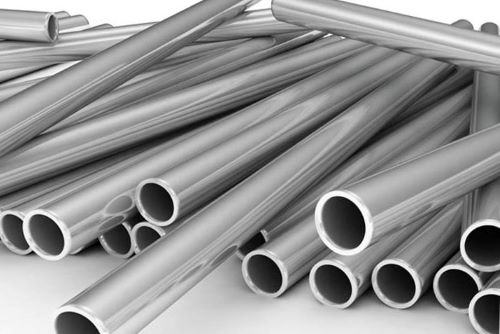
Among refractory and corrosion-resistant metals, tantalum occupies a unique position. With an exceptional melting point of 3,017 °C, outstanding resistance to almost all inorganic acids, and remarkable ductility compared with other refractory metals, tantalum is widely used for piping systems in the harshest chemical and high-temperature environments.
Producing high-quality tantalum pipes, however, is far more complex than manufacturing conventional steel or titanium tubing. The metal's high melting point, affinity for oxygen and nitrogen, and strict purity requirements demand specialized powder metallurgy routes, controlled consolidation processes, and multi-stage thermomechanical forming. Let's walks through the complete manufacturing pathway.
-
Raw Material Preparation
The journey begins not with molten metal, but with tantalum powder produced by chemical reduction of tantalum pentoxide (Ta₂O₅). Commercial production typically uses sodium or magnesium reduction in sealed reactors, yielding fine, porous metallic powder.
For piping applications, purity is paramount. Oxygen, nitrogen, hydrogen, and carbon impurities can drastically reduce ductility and corrosion resistance. Semiconductor and pharmaceutical users often require tantalum with purity levels of 99.9%–99.99% (3N–4N), with oxygen content controlled below a few hundred parts per million.
Before consolidation, powders are carefully classified, blended, and degassed under vacuum. Particle size distribution influences densification behavior and final grain structure, making powder conditioning a critical first quality step.
-
Powder Consolidation
Because tantalum melts at extremely high temperatures and oxidizes readily when molten, most industrial processing avoids direct casting. Instead, manufacturers rely on powder metallurgy consolidation to produce solid billets.
Two primary routes are used:
Cold Isostatic Pressing (CIP) + Sintering
The tantalum powder is filled into flexible molds and compacted under high hydrostatic pressure, forming a "green" billet. This billet is then vacuum-sintered at temperatures above 2,000 °C. During sintering, particles bond together, pores shrink, and density increases to above 95–98% of theoretical.
Hot Isostatic Pressing (HIP)
For higher-performance applications, HIP combines heat and pressure simultaneously. This produces near-fully dense billets with excellent homogeneity and minimal internal porosity—essential for pressure-bearing pipes.
After consolidation, the billets are machined into cylindrical preforms suitable for further deformation.
-
Primary Melting and Refining
To further purify and homogenize the metal, many manufacturers subject consolidated billets to electron beam melting (EBM) or vacuum arc remelting (VAR). These high-vacuum processes remove residual volatile impurities and break down chemical segregation.
Electron beam melting is particularly valuable for tantalum because it operates in ultra-high vacuum, allowing oxygen, nitrogen, and hydrogen to escape. The resulting ingots exhibit:
- Extremely low interstitial impurity levels
- Uniform microstructure
- Improved ductility and corrosion resistance
These refined ingots form the starting stock for pipe and tube manufacturing.
-
Piercing and Extrusion
Transforming a solid ingot into a hollow tube is one of the most technically demanding steps.
The ingot is first hot-forged or rolled into a cylindrical billet. Then, one of two methods is used:
Hot Piercing
A heated billet is pierced longitudinally using a mandrel, creating a thick-walled hollow shell. This method resembles seamless steel tube production but requires precise temperature control and protective atmospheres to prevent oxidation.
Hot Extrusion
In extrusion, the billet is forced through a die over a mandrel, forming a hollow tube directly. For tantalum, extrusion is performed at elevated temperatures in vacuum or inert gas environments. Lubrication and tooling materials must be carefully selected to avoid contamination.
At this stage, the product is a seamless tantalum tube blank with relatively thick walls and coarse microstructure.
-
Cold Working and Intermediate Annealing
To achieve final dimensions and mechanical properties, tantalum tubes undergo multiple cycles of cold drawing or cold rolling, followed by vacuum annealing.
Cold working reduces wall thickness and diameter while increasing strength through strain hardening. However, excessive deformation reduces ductility, so intermediate annealing steps are essential. Annealing is performed in high-vacuum or high-purity inert gas furnaces at temperatures between 1,200 °C and 1,600 °C to:
- Restore ductility
- Relieve internal stresses
- Promote uniform recrystallized grain structures
This multi-pass process allows manufacturers to produce tantalum pipes with tight dimensional tolerances, smooth surface finishes, and controlled mechanical properties.
-
Surface Finishing and Cleaning
Because tantalum pipes are often used in ultra-clean chemical and semiconductor systems, surface quality is critical.
Typical finishing steps include:
- Precision straightening and sizing
- Mechanical polishing or centerless grinding
- Chemical pickling to remove surface oxides and residues
- Ultrasonic and solvent cleaning
For high-purity applications, final cleaning may be performed in cleanroom environments, and pipes are sealed in vacuum or inert packaging to prevent recontamination.
-
Inspection and Quality Control
Given the cost and criticality of tantalum piping, rigorous inspection is mandatory.
Common quality checks include:
- Chemical analysis (GDMS, O/N/H analysis) to verify purity
- Dimensional inspection for OD, ID, and wall thickness
- Eddy current and ultrasonic testing for internal defects
- Hydrostatic pressure testing for pressure-rated pipes
- Microstructural examination to confirm grain size and uniformity
Only tubes meeting strict ASTM, ASME, or customer-specific standards are released for service.
- Solid Tantalum vs. Tantalum-Clad Pipes
While this article focuses on solid tantalum pipes, it is worth noting an important alternative: tantalum-clad steel pipes. In these products, a thin layer of tantalum is metallurgically bonded to a steel substrate, combining tantalum's corrosion resistance with steel's strength and lower cost.
Solid tantalum pipes are preferred when:
- Ultra-high purity is required
- Thermal cycling is severe
- Maximum corrosion resistance is critical
Clad pipes dominate large-diameter chemical process piping where cost and mechanical strength are primary concerns.
Conclusion
Manufacturing tantalum pipes is a sophisticated, multi-stage process that blends powder metallurgy, vacuum refining, hot deformation, and precision cold working. Each step is carefully controlled to preserve tantalum's exceptional corrosion resistance, ductility, and purity—properties that make it indispensable in the most aggressive chemical and high-temperature environments.
REVIEWS
{{viewsNumber}}
Thought On "{{blogTitle}}"

{{item.name}}
{{item.created_at}}
{{item.content}}
LEVE A REPLY
Comment
Name
*
Email
*
{{item.children[0].name}}
{{item.children[0].created_at}}
{{item.children[0].content}}
{{item.name}}
{{item.created_at}}
{{item.content}}
More Replies
LEAVE A REPLY
Comment
*
Name
*
Email
*
SUBSCRIBE OUR NEWSLETTER
Your Name
*
Your Email
*
Success ! You're now subscribed
You've been successfully subscribed! Check your inbox soon for great emails from this sender.
Our Latest News
Tel : (949) 407-8904
Address : 1940 East Deere Avenue, Suite 100, Santa Ana, CA 92705, U. S. A
Metals

Useful Links
Featured Posts