





A Comprehensive Classification of Special Refractories
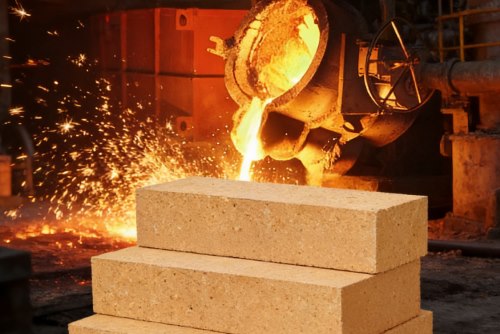
Where temperatures soar beyond 1600°C and aggressive chemical environments are the norm, a special class of materials stands as the unsung guardian of progress. These are special refractories—engineered ceramics that form the essential linings of furnaces, reactors, and engines, enabling everything from steel production to space exploration. Understanding their systematic classification is a key to selecting the right material for the right job.
The Primary Divide: Chemical Composition
The most fundamental way to categorize special refractories is by their dominant chemical makeup, which dictates their core properties and compatibility.
1. Oxide Refractories
Alumina-Based (Al₂O₃): The workhorse of the group, materials with over 90% Al₂O₃—known as corundum or high-alumina refractories—offer excellent hardness, good mechanical strength, and high refractoriness up to 2050°C. They are ubiquitous in steel ladles, chemical reactors, and as catalyst supports.
Zirconia-Based (ZrO₂): Zirconia is the champion of toughness and corrosion resistance. Its unique property of "transformation toughening" allows it to resist crack propagation under stress. This, combined with a very high melting point (~2700°C), makes it indispensable for continuous casting nozzles, glass tank furnaces, and advanced thermal barrier coatings in jet engines.
Magnesia-Based (MgO): The quintessential basic refractory, magnesia exhibits outstanding resistance to basic slags prevalent in steelmaking. Its high thermal conductivity is a double-edged sword, useful in some applications but a liability for heat conservation. It is the primary choice for linings in basic oxygen and electric arc furnaces.
Specialized Oxides: This includes materials like Calcia (CaO), with exceptional metallurgical purity but poor hydration resistance, and Silica (SiO₂), prized for its low thermal expansion and acid slag resistance in coke ovens and glassmaking.
2. Non-Oxide Refractories
Carbon and Graphite: Pure carbon and graphite refractories are in a class of their own. They do not melt but sublime above 3000°C, possess unparalleled thermal shock resistance due to high thermal conductivity, and are wetted by very few molten metals. Their Achilles' heel is oxidation in air above 400°C. They are critical in blast furnace hearths, aluminum reduction cells, and aerospace components.
Carbides: Silicon Carbide (SiC) is arguably the most important non-oxide refractory. It combines high thermal conductivity, superior strength, extreme hardness, and excellent oxidation resistance (forming a protective SiO₂ layer). It is the material of choice for high-temperature kiln furniture, advanced heat exchangers, and abrasion-resistant linings.
Nitrides & Borides: Silicon Nitride (Si₃N₄) and Boron Nitride (BN) offer a blend of high strength, good thermal shock resistance, and machinability (in the case of BN, known as "white graphite"). The ultimate performers are Zirconium Diboride (ZrB₂) and similar Ultra-High Temperature Ceramics (UHTCs), which can withstand short-term exposure above 3000°C, making them candidates for hypersonic vehicle leading edges.
The Chemical Character: Acidic, Basic, and Neutral
Another classification is based on chemical behavior, which is critical for metallurgy and glassmaking and determines a refractory's resistance to different process slags.
Acidic Refractories (e.g., silica, zircon) resist acidic slags (rich in SiO₂) but react vigorously with basic ones.
Basic Refractories (e.g., magnesia, dolomite) are stable against basic slags (rich in CaO, MgO) but attacked by acidic slags.
Neutral Refractories (e.g., alumina, chromite, carbon, silicon carbide) offer the broadest compatibility, resisting both acidic and basic attacks to a significant degree, making them versatile general-purpose linings.
The Physical Form: Shaped vs. Unshaped
Finally, refractories are classified by their delivery and installation state, which impacts application speed, lining integrity, and design flexibility.
Shaped Refractories (Bricks and Preforms): These are pre-fired, precision-manufactured units with defined shapes—standard bricks, arches, or complex custom shapes. They offer consistent, predictable properties and are used where dimensional accuracy and structural integrity are paramount, such as in blast furnace stacks or glass tank superstructures.
Unshaped Refractories (Monolithics): This growing category includes castables, plastics, ramming mixes, and gunning mixes—refractory aggregates delivered in a wet, moldable, or dry form. They are installed on-site to form a joint-free, seamless lining. Castables, especially modern Low-Cement and Ultra-Low-Cement Castables (LCC/ULCC), have revolutionized furnace linings due to their rapid installation, superior spall resistance, and ability to form complex geometries. They dominate in areas like steel ladles, furnace roofs, and burner blocks.
The Driving Force: Classification Informs Application
This classification is not academic; it directly guides life-or-death engineering choices. In a steelmaker's basic oxygen furnace, where liquid steel and highly basic slag coexist at 1700°C, a magnesia-carbon (MgO-C) composite brick is chosen. Its magnesia core provides basic slag resistance, while the carbon matrix enhances thermal shock resistance and lowers wettability by slag.
Conversely, in a glass melting tank containing highly corrosive, acidic silicate melt, the critical superstructure might use fused-cast alumina-zirconia-silica (AZS) bricks. Their dense, corrosion-resistant microstructure, born from their specific oxide composition and fusion-cast shaping, ensures they don't contaminate the melt while surviving for years.
For the rapid patching of a damaged rotary cement kiln lining, a crew will use a spin-forming gun to apply a magnesia-spinel gunning mix—an unshaped, basic refractory designed for quick, effective monolithic installation.
Conclusion
The classification of special refractories—by composition, chemistry, and form—provides a fundamental framework that bridges material science with industrial application. As technology pushes into ever more extreme territories, the demand on these materials will only intensify. For more high temperature materials, please check Advanced Refractory Metals (ARM).
REVIEWS
{{viewsNumber}}
Thought On "{{blogTitle}}"

{{item.name}}
{{item.created_at}}
{{item.content}}
LEVE A REPLY
Comment
Name
*
Email
*
{{item.children[0].name}}
{{item.children[0].created_at}}
{{item.children[0].content}}
{{item.name}}
{{item.created_at}}
{{item.content}}
More Replies
LEAVE A REPLY
Comment
*
Name
*
Email
*
SUBSCRIBE OUR NEWSLETTER
Your Name
*
Your Email
*
Success ! You're now subscribed
You've been successfully subscribed! Check your inbox soon for great emails from this sender.
Our Latest News
Tel : (949) 407-8904
Address : 1940 East Deere Avenue, Suite 100, Santa Ana, CA 92705, U. S. A
Metals

Useful Links
Featured Posts