





Can Molybdenum Replace Tungsten?
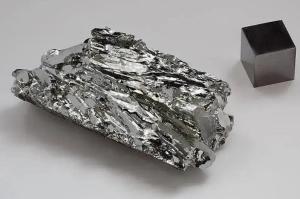
Whether molybdenum can step in for tungsten really depends on what you're trying to do. In some cases, molybdenum makes a solid, cost-effective substitute. But when you need tungsten's extreme performance—like its record-breaking melting point or super-high density—molybdenum just can't pull it off.
The reason comes down to this: molybdenum and tungsten are in the same group on the periodic table, so their chemical behavior is similar. But their key physical properties are pretty different. Choosing between them is really about balancing performance, cost, and how easy they are to work with.
When Molybdenum Can Replace Tungsten
Molybdenum has a lower melting point, less strength, and doesn't handle extreme heat quite as well as tungsten. So it only makes sense as a replacement in applications that aren't pushing the absolute limits. In those cases, molybdenum's advantages—better affordability and easier machining—really shine, especially when its lower performance isn't actually a dealbreaker. Here are a few scenarios where it works.
1. When your process temperature stays below 2000–2200°C. That covers a lot of industrial furnace heating elements and crucibles for melting non-ferrous metals like semiconductor-grade silicon. Tungsten, by comparison, is what you need for extreme environments above 2500°C, like melting other refractory metals such as tantalum or rhenium.
2. Semiconductor manufacturing. This is one of the clearest cases where molybdenum is taking over from tungsten. As chip features get smaller, tungsten's resistance shoots up in ultra-fine interconnects. Molybdenum has lower resistance and doesn't need a barrier layer, which simplifies the process and cuts down overall resistance. Studies show that swapping tungsten for molybdenum in certain processes can reduce total resistance by about 56%.
3. When weight matters. Tungsten is dense—19.3 g/cm³. Molybdenum comes in at about half that, around 10.2 g/cm³. In aerospace applications or mobile devices where every gram counts, molybdenum is the smarter pick.
4. When machining cost is a factor. Molybdenum is softer and has a lower melting point than tungsten, which means it's way easier to shape into different forms. The raw material is also cheaper. If your project is cost-sensitive, molybdenum is usually the more economical route.
When Molybdenum Won't Replace Tungsten
If the application really depends on tungsten's extreme properties, molybdenum isn't going to work.
Tungsten has the highest melting point of any metal—3422°C. Molybdenum's is 2623°C. If your operating temperature goes above 2500°C, tungsten is your only option.
Tungsten is nearly twice as dense as molybdenum. So if you need a lot of mass packed into a small volume, tungsten is irreplaceable. Think radiation shielding, or counterweights in precision instruments.
Tungsten alloys generally have higher tensile strength and hardness than molybdenum. For precision mechanical parts that have to handle extreme torque or serious wear, tungsten comes out on top.
A Special Case: Catalysis and Biochemistry
One thing to keep in mind: in certain chemical reactions or biological enzyme systems, molybdenum and tungsten can't swap places. For example, enzymes that rely on tungsten will lose their function if you try to substitute molybdenum—they just won't catalyze the reaction anymore.
Quick Comparison
|
Property |
Tungsten |
Molybdenum |
|
Melting Point |
3422°C (extremely high) |
2623°C (high) |
|
Density |
19.3 g/cm³ (very high) |
10.2 g/cm³ (about half of tungsten) |
|
Electrical Resistivity |
Struggles in tiny interconnects |
Performs better at advanced nodes |
|
Machining & Cost |
Hard to work with, expensive |
Easier to machine, lower cost |
|
Main Applications |
Extreme high heat, radiation shielding, counterweights, armor-piercing rounds |
Semiconductor interconnects, mid-to-high-temp furnaces, lightweight structures |
Conclusion
If your application doesn't demand the absolute highest temperatures, you care about weight and cost, or you're working in advanced semiconductor manufacturing, molybdenum is a great substitute for tungsten. But when you're dealing with extreme heat, need high density for shielding or counterweights, or require maximum strength, tungsten still has no replacement. Whether you need tungsten metal, molybdenum metal, or other refractory metals, Advanced Refractory Metals (ARM) can provide them for you.
REVIEWS
{{viewsNumber}}
Thought On "{{blogTitle}}"

{{item.name}}
{{item.created_at}}
{{item.content}}
LEVE A REPLY
Comment
Name
*
Email
*
{{item.children[0].name}}
{{item.children[0].created_at}}
{{item.children[0].content}}
{{item.name}}
{{item.created_at}}
{{item.content}}
More Replies
LEAVE A REPLY
Comment
*
Name
*
Email
*
SUBSCRIBE OUR NEWSLETTER
Your Name
*
Your Email
*
Success ! You're now subscribed
You've been successfully subscribed! Check your inbox soon for great emails from this sender.
Our Latest News
Tel : (949) 407-8904
Address : 1940 East Deere Avenue, Suite 100, Santa Ana, CA 92705, U. S. A
Metals

Useful Links
Featured Posts