





Titanium Wire Grades: Grade 1, Grade 2, and Grade 5 Explained
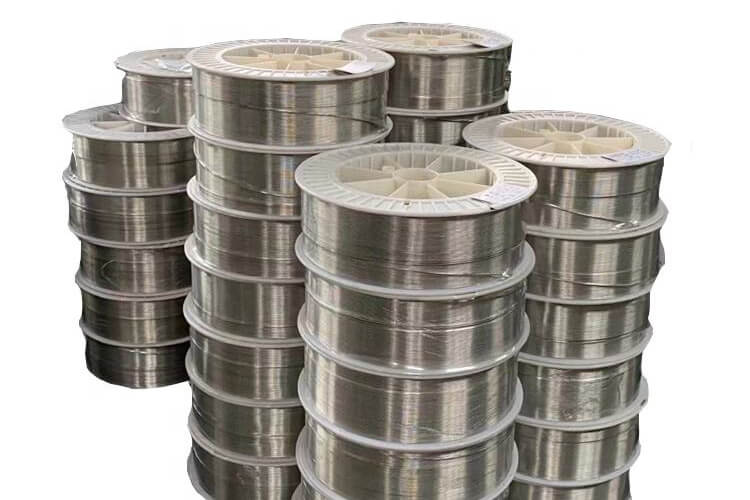
Titanium wire is widely used in aerospace, medical, chemical processing, energy, and precision manufacturing because it combines high strength-to-weight ratio, corrosion resistance, and biocompatibility. However, not all titanium wire performs the same way.
Grade 1, Grade 2, and Grade 5 are the most commonly specified for wire applications. The grade you select directly affects strength, ductility, weldability, corrosion resistance, and long-term durability.
Understanding Titanium Grade Classifications
Titanium grades are generally divided into two categories:
- Commercially Pure (CP) Titanium – Grades 1–4
- Titanium Alloys – Grade 5 and beyond
Grades 1 and 2 belong to the commercially pure family, meaning they contain very high titanium content (typically >99%) with controlled oxygen levels that determine strength. Grade 5, on the other hand, is an alloyed material known as Ti-6Al-4V, containing aluminum and vanadium to significantly enhance strength.
Grade 1 Titanium Wire
Grade 1 titanium wire is the most ductile and soft of all the commercially pure grades of titanium, providing the highest degree of formability and excellent corrosion resistance. The extremely low oxygen content provides a high degree of plasticity compared to other CP grades, making it the best choice for use in applications where bending, forming, or deep drawing is required. In the annealed state, Grade 1 provides a tensile strength of approximately 240 MPa (35 ksi), yield strength of 170 MPa (25 ksi), elongation of 24%, and a density of 4.51 g/cm³. Although it is not intended for heavy structural loading, it is excellent in aggressive chemical and marine environments.
The key property of Grade 1 is its high corrosion resistance and high ductility. It resists corrosion from seawater, chlorides, and many oxidizing acids, making it a good choice for use in harsh industrial environments. Its softness allows it to be bent without cracking on a tight radius, and it is easy to weld, fabricate, and cold form. It is a good choice when compared to higher-strength grades because it emphasizes workability and chemical resistance over strength.
Grade 1 titanium wire is often employed in chemical processing apparatuses, cathodic protection systems, desalination plants, and laboratory equipment. In a seawater desalination plant, for instance, thin titanium tie wire can be used to hold mesh assemblies in filtration modules. In such a corrosive but mechanically less demanding environment, Grade 1 titanium wire is both durable and easy to handle.
Grade 2 Titanium Wire
Grade 2 titanium wire is the most popular commercially pure titanium grade. It has a balance of resistance to corrosion, moderate strength, and reasonable cost. It has a slightly higher oxygen content than Grade 1 titanium wire, which makes it stronger without much loss of ductility. In its annealed condition, Grade 2 titanium wire has a typical tensile strength of 345 MPa (50 ksi), yield strength of 275 MPa (40 ksi), elongation of 20%, and the same density of 4.51 g/cm³.
The key benefit of Grade 2 is the balanced property profile. Grade 2 retains the corrosion resistance of Grade 1 in sea water, oxidizing acids, and most chloride-containing environments, with significantly enhanced strength. It is also easy to weld, and its behavior in fabrication operations is well understood. Moreover, it is still economical compared to other alloy grades of titanium. Grade 2 is therefore chosen when a combination of durability and moderate structural performance is needed. It is also commonly specified under ASTM B863 for titanium wire products.
Grade 2 titanium wire is commonly used in heat exchanger supports, aerospace safety wire, medical instruments, oil and gas equipment, and electrochemical anodes. In aircraft engines, for instance, titanium safety wire is used to secure fasteners subjected to vibration and temperature variations. Grade 2 has enough strength to resist mechanical loads and is also lightweight and corrosion-resistant, thus providing reliability without the need for the high-strength properties of alloy grades, which are expensive.
Grade 5 Titanium Wire (Ti-6Al-4V)
Grade 5 titanium wire, also known as Ti-6Al-4V, is the most popular titanium alloy and is famous for its outstanding strength-to-weight ratio. By combining titanium with about 6% aluminum and 4% vanadium, the mechanical strength of the material is significantly enhanced compared to commercially pure titanium. In the annealed state, Grade 5 titanium is known to offer a tensile strength ranging from 895 to 930 MPa (130-135 ksi), a yield strength of approximately 825 MPa (120 ksi), elongation of 10-14%, and a density of 4.43 g/cm³. This is more than twice as strong as Grade 2 but still much lighter than steel.
The most distinguishing characteristic of Grade 5 titanium is its high strength and high fatigue resistance. It is suitable for use in harsh environments where cyclic loading and weight savings are of prime importance. Although it still offers excellent resistance to corrosion, it may be slightly lower compared to commercially pure titanium in some reducing acid environments. Compared to Grades 1 and 2, Grade 5 has lower ductility and requires more precise processing and welding techniques, but it also offers higher load-carrying capacity.
Grade 5 titanium wire is widely used in aerospace structural components, high-performance fasteners and springs, orthopedic implants, racing applications, and additive manufacturing feedstock. In aerospace landing gear assemblies, for instance, wire-form springs must withstand extreme fatigue stress while minimizing weight. Grade 5 allows engineers to reduce wire diameter without compromising strength, leading to lighter and more efficient designs. In medical trauma fixation devices, Ti-6Al-4V wire is selected because it combines high mechanical strength with proven biocompatibility, supporting both structural integrity and patient safety.
How to Choose Titanium Wire Grades
Corrosion Resistance Comparison
Grades 1 and 2 generally provide superior corrosion resistance in highly oxidizing environments, including:
- Seawater
- Wet chlorine
- Nitric acid
- Marine atmospheres
Grade 5 also performs well but may not match CP titanium in certain strongly reducing acid environments. However, in most industrial and aerospace conditions, Grade 5 corrosion resistance is more than adequate.
Formability and Fabrication
- Best Formability: Grade 1
- Balanced Fabrication: Grade 2
- Most Difficult to Form: Grade 5
If your application requires frequent bending, coiling, or tight-radius forming, commercially pure grades are easier to process. Grade 5 may require controlled forming processes or post-form heat treatment.
Cost Considerations
In general:
- Grade 1 and Grade 2 are more cost-effective.
- Grade 5 costs more due to alloying elements and processing complexity.
However, in high-load applications, Grade 5 may reduce overall system cost by enabling smaller diameters and weight reduction.
Titanium Wire Grade Comparison Table
|
Property |
Grade 1 |
Grade 2 |
Grade 5 (Ti-6Al-4V) |
|
Type |
Commercially Pure |
Commercially Pure |
Titanium Alloy |
|
Tensile Strength |
~240 MPa |
~345 MPa |
~900 MPa |
|
Yield Strength |
~170 MPa |
~275 MPa |
~825 MPa |
|
Elongation |
~24% |
~20% |
10–14% |
|
Density (g/cm³) |
4.51 |
4.51 |
4.43 |
|
Corrosion Resistance |
Excellent |
Excellent |
Very Good |
|
Formability |
Excellent |
Good |
Moderate |
|
Weldability |
Excellent |
Very Good |
Good (controlled) |
|
Typical Applications |
Chemical processing, marine |
Aerospace safety wire, medical |
Aerospace structures, implants |
|
Relative Cost |
Low |
Moderate |
Higher |
Related reading: Types and Applications of Titanium Wires
Conclusion
Titanium wire grade selection is not simply about choosing the strongest option. It requires balancing mechanical performance, corrosion resistance, fabrication requirements, and budget.
Grade 1 excels in corrosive environments with minimal load. Grade 2 offers the most versatile balance for industrial and aerospace applications. Grade 5 delivers unmatched strength for structural and high-performance uses. For more titanium products, please check Advanced Refractory Metals (ARM).
REVIEWS
{{viewsNumber}}
Thought On "{{blogTitle}}"

{{item.name}}
{{item.created_at}}
{{item.content}}
LEVE A REPLY
Comment
Name
*
Email
*
{{item.children[0].name}}
{{item.children[0].created_at}}
{{item.children[0].content}}
{{item.name}}
{{item.created_at}}
{{item.content}}
More Replies
LEAVE A REPLY
Comment
*
Name
*
Email
*
SUBSCRIBE OUR NEWSLETTER
Your Name
*
Your Email
*
Success ! You're now subscribed
You've been successfully subscribed! Check your inbox soon for great emails from this sender.
Our Latest News
Tel : (949) 407-8904
Address : 1940 East Deere Avenue, Suite 100, Santa Ana, CA 92705, U. S. A
Metals

Useful Links
Featured Posts