





Spherical Tantalum Powder: Optimizing Flowability, Apparent Density, and Particle Size Distribution
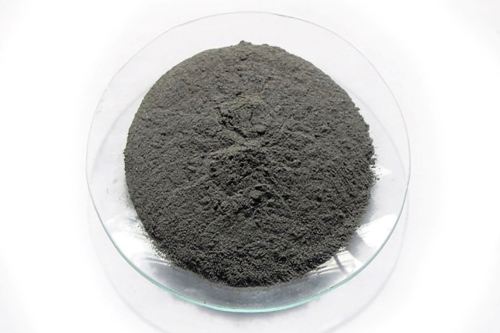
In the world of advanced manufacturing, the physical characteristics of powder feedstocks—particularly flowability, apparent density, and particle size distribution (PSD)—are key to ensuring the efficiency, consistency, and quality of the final product. For spherical tantalum powder, these properties not only influence the material's processability but also determine its suitability for demanding industries like aerospace, electronics, and medical implants. Let's explores how these three core characteristics interact, and why optimizing them is essential for high-performance applications.
Particle Size Distribution: The Foundation of Powder Performance
Particle Size Distribution (PSD) refers to the range of particle sizes within the powder sample. This, in turn, has an effect on the flowability as well as the apparent density. By regulating the PSD, the manufacturers are able to design the powder according to the requirements of the particular processes. When dealing with spherical tantalum powders, the PSD is critical in order to achieve the maximum packing efficiency as well as the flowability of the powders.
In the case of Additive Manufacturing (AM) processes such as Laser Powder Bed Fusion (LPBF) as well as Electron Beam Melting (EBM), the PSD falls within the range of 15-45 µm for LPBF, while for EBM, the range is 45-106 µm. A narrower PSD allows for the consistent packing of the powders, thereby increasing the density. When the fine powders are packed within the spaces between the large powders, the apparent density is enhanced. This is critical in the production of dense components. However, the fine powders are associated with low flowability, while the large powders are associated with low packing efficiency.
A bimodal distribution, which combines both fine and coarse particles, can strike a balance by maximizing packing density without sacrificing flowability. By fine-tuning the PSD during production, manufacturers can optimize powder performance for different applications.
Apparent Density: Maximizing Packing Efficiency
Apparent density, also called tap density, is an important property for determining the amount of powder contained in a given volume. This property is significant in powder bed-based AM processes like LPBF and EBM, as the density of the powder has a direct effect on the quality of the final product. A higher apparent density means fewer defects in the final product, thereby providing better structural integrity.
Tap density is generally determined by tapping the powder contained in a cylinder until the powder is compacted. When considering spherical tantalum powders, high-quality plasma atomized powders are capable of achieving tap densities higher than 55% of the theoretical density of tantalum, approximately 16.69 g/cm³, commonly reaching values of 4.5 g/cm³ or higher. This higher density has a direct effect on the quality of the powder, as the powder bed becomes more homogeneous, thereby reducing the possibility of defects such as porosity and non-homogeneous melting.
For applications like metal injection molding (MIM) or capacitor manufacturing, a high tap density ensures that the powder can be compacted into robust, high-performance components. In MIM, this property is crucial for creating precise shapes that can withstand demanding environments.
Flowability: The Dynamic Property for Consistency
Flowability is the ease with which the powder flows under gravity. In AM and powder metallurgy, the flowability of the powder is critical in the recoating process. The recoating process involves the deposition of the powder. When the powder does not flow well, the recoated powder may not be even. This may cause problems such as porosity, non-uniform melting, and recoater blade jamming. The flowability of spherical tantalum powder is affected by several factors. The sphericity of the powder, the roughness of the powder particles, and the presence of fine powder are the major factors. The spherical particles are those whose shapes are close to spherical. The spherical particles are critical since the spherical particles will have minimal friction as they move past each other. Satellites are the fine particles that are attached to the larger particles. Satellites may affect the flowability since the particles may interlock. The fine powders are those powders whose sizes are less than 10 µm. The fine powders increase the cohesion between the particles. The flowability of the powder may be determined using sophisticated equipment such as the Revolution Powder Analyzer (RPA) or the FT4 Powder Rheometer.
For applications like LPBF, poor flowability can lead to inconsistent layer deposition, while EBM—which uses thicker powder layers—relies on consistent powder behavior to ensure uniform recoating and part consolidation.
Optimizing Powder Characteristics for Application Suitability
The three properties of spherical tantalum powder—PSD, apparent density, and flowability—are closely related to each other, and their optimization involves considering these properties as a whole. Among these properties, PSD is the most dominant factor, as it affects both powder density and powder flowability. It is generally accepted that bimodal PSD, which consists of both fine and coarse powder sizes, can be used to optimize powder density, although this may have some negative impacts on powder flowability. On the other hand, monodisperse PSD can be used to optimize powder flowability at the expense of powder density.
The role of powder sphericity cannot be overemphasized with regard to powder flowability and density. It is generally accepted that without spherical powder, it would be difficult to obtain good powder flowability and density. Furthermore, powder flowability and density are the end products of how well PSD and powder sphericity are balanced.
Related reading: Spherical Tantalum Powder for 3D Printing
Conclusion
Optimizing spherical tantalum powder—especially its flowability, apparent density, and particle size distribution (PSD)—is crucial for achieving high-quality components in Additive Manufacturing, Powder Metallurgy, and other advanced applications. These properties work together to ensure consistent performance, minimize defects, and meet the specific demands of industries like aerospace, electronics, and medical implants. For more tantalum products, please visit Advanced Refractory Metals (ARM).
REVIEWS
{{viewsNumber}}
Thought On "{{blogTitle}}"

{{item.name}}
{{item.created_at}}
{{item.content}}
LEVE A REPLY
Comment
Name
*
Email
*
{{item.children[0].name}}
{{item.children[0].created_at}}
{{item.children[0].content}}
{{item.name}}
{{item.created_at}}
{{item.content}}
More Replies
LEAVE A REPLY
Comment
*
Name
*
Email
*
SUBSCRIBE OUR NEWSLETTER
Your Name
*
Your Email
*
Success ! You're now subscribed
You've been successfully subscribed! Check your inbox soon for great emails from this sender.
Our Latest News
Tel : (949) 407-8904
Address : 1940 East Deere Avenue, Suite 100, Santa Ana, CA 92705, U. S. A
Metals

Useful Links
Featured Posts