





Precious Metals, Refractory Metals, and Specialty Metals
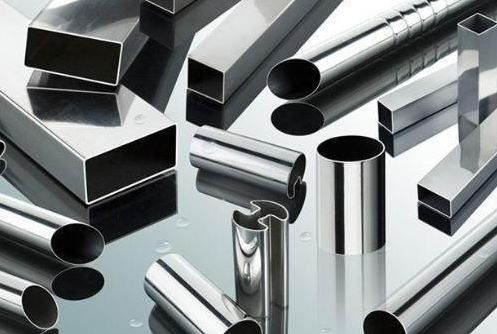
Modern high-technology industries rely on a small but powerful group of metals whose properties go far beyond those of steel, copper, or aluminum. Among the most important are precious metals, refractory metals, and specialty metals. Each category is defined by a distinct combination of rarity, chemical behavior, mechanical performance, and functional value.
Precious metals are prized for chemical inertness, electrical conductivity, and catalytic activity. Refractory metals are chosen for their ability to survive extreme temperatures and mechanical stress. Specialty metals form a broad class of materials engineered for highly specific roles in electronics, aerospace, medical devices, energy systems, and scientific research.
Precious Metals – Stability, Conductivity, and Catalysis
The precious metals are distinguished by their resistance to corrosion and oxidation, combined with their excellent electrical and thermal conductivities and unique catalytic properties. They are relatively rare and expensive, but their properties often exceed those of less expensive alternatives.
Gold (Au)
Gold is chemically inactive, highly conductive, and extremely ductile. Gold does not oxidize in air or corrode in most chemical environments. These properties make gold an ideal material for reliable electrical connections, microelectronic bonding wires, and aerospace and telecommunication connectors. In the medical field, gold coatings and nanoparticles are used in diagnostics, implants, and cancer treatments. Gold is also a critical component of precision sensors and optical coatings.
Platinum (Pt)
Platinum combines chemical resistance with extraordinary catalytic properties and a very high melting point (1768 °C). It is commonly used in automotive catalytic converters, petroleum industry catalysts, and fuel cell electrodes. In the medical field, platinum alloys are used in pacemaker electrodes, stents, and chemotherapy agents such as cisplatin. Platinum's chemical inertness also makes it useful in laboratory crucibles and thermocouples.
Palladium (Pd)
Palladium is similar to platinum but lighter and has similar catalytic properties. It plays an important role in hydrogen purification membranes, car exhaust catalysts, and the manufacture of fine chemicals. Palladium has many uses in the electronics industry, too, particularly in multilayer ceramic capacitors and as a plating component for corrosion-resistant connectors.
Silver (Ag)
It is worth noting that silver has the best electrical and thermal properties among all metals. It plays an essential role in high-frequency devices, solar contacts, RF devices, and conductive pastes. Silver also has antibacterial properties and is used in medical devices, medical coatings, and water purification systems.
Refractory Metals – Strength at Extreme Temperatures
Refractory metals are above the 2000°C mark in terms of melting points, and they are strong, even in hot conditions. They are very important in various applications, such as furnaces, advanced aircraft, nuclear power, and high-temperature electronics.
Tungsten (W)
Tungsten has the highest melting point of all the metals, standing at 3422°C, and it is the best refractory metal. It is resistant to creep, dense, and has low vapor pressure. Tungsten is used in furnace heating coils, evaporation boats, thin film deposition, X-ray targets, radiation shielding, and plasma facing components, particularly in fusion devices. It is used as an interconnect in semiconductor devices as well.
Molybdenum (Mo)
Molybdenum is a refractory metal with a melting point of 2623°C, high thermal conductivity, and machinability. It is used in crystal growth, high-temperature fixtures, sputtering targets, and vacuum electronics, particularly in TZM alloys, where it is used for high creep resistance.
Tantalum (Ta)
Tantalum is unique in its insanely high melting point of 3017 °C and its incredible resistance to corrosion. It forms a toughening oxide layer that resists virtually all acids. Tantalum is used in chemical processing equipment, heat exchangers, medical implants, and high-reliability capacitors for aerospace and defense applications.
Niobium (Nb)
Niobium is unique in that it is the only refractory metal that remains ductile and even superconducts. Pure niobium is critical for the superconducting radio frequency cavities in particle accelerators and quantum computing experiments. Its alloys are also used to toughen turbine blades and rocket nozzles.
Specialty Metals – Engineered for Specific Performance
Specialty metals include a wide range of materials selected for particular electronic, magnetic, biomedical, nuclear, or structural functions. Their defining feature is not a single property, but their ability to solve very specific engineering problems.
Titanium (Ti)
Titanium combines high strength-to-weight ratio, corrosion resistance, and excellent biocompatibility. It is widely used in aerospace structures, jet engines, chemical reactors, and medical implants such as hip joints and dental screws. Titanium alloys are central to lightweight, high-performance design.
Rhenium (Re)
Rhenium is both a refractory and a specialty metal. It has a melting point of 3186 °C and exceptional creep resistance. Rhenium is added to nickel-based superalloys in jet engines and rocket nozzles and used as a catalyst in petroleum refining.
Cobalt (Co)
Cobalt is essential in superalloys, magnetic materials, and lithium-ion battery cathodes. Cobalt-chromium alloys are widely used in orthopedic implants and dental prosthetics due to their wear resistance and biocompatibility.
Summary Table: Key Properties and Applications
|
Category |
Metal |
Melting Point (°C) |
Key Characteristics |
Main Applications |
|
Precious Metals |
Gold (Au) |
1064 |
Inert, excellent conductivity, ductile |
Microelectronics, connectors, medical coatings |
|
Platinum (Pt) |
1768 |
Catalytic, corrosion resistant |
Catalysts, fuel cells, medical devices |
|
|
Palladium (Pd) |
1555 |
Hydrogen affinity, catalytic |
Catalysts, hydrogen membranes, capacitors |
|
|
Silver (Ag) |
962 |
Highest conductivity, antibacterial |
RF electronics, solar cells, medical coatings |
|
|
Refractory Metals |
Tungsten (W) |
3422 |
Highest melting point, high density |
Furnaces, X-ray tubes, fusion reactors |
|
Molybdenum (Mo) |
2623 |
High thermal conductivity |
Crystal growth, sputtering targets |
|
|
Tantalum (Ta) |
3017 |
Corrosion resistant, biocompatible |
Capacitors, chemical vessels, implants |
|
|
Niobium (Nb) |
2477 |
Superconducting, ductile |
Accelerators, turbine alloys |
|
|
Specialty Metals |
Titanium (Ti) |
1668 |
High strength-to-weight, biocompatible |
Aerospace, implants, chemical reactors |
|
Zirconium (Zr) |
1855 |
Low neutron absorption |
Nuclear fuel cladding |
|
|
Hafnium (Hf) |
2233 |
Neutron absorber, high-k dielectric |
Control rods, advanced transistors |
|
|
Rhenium (Re) |
3186 |
Creep resistant |
Jet engines, catalysts |
|
|
Cobalt (Co) |
1495 |
Magnetic, wear resistant |
Batteries, implants, superalloys |
Conclusion
Precious metals, refractory metals, and specialty metals represent three pillars of advanced materials engineering. Precious metals provide unmatched chemical stability, conductivity, and catalytic activity. Refractory metals sustain extreme temperatures and mechanical stress where ordinary alloys fail. Specialty metals fill the gaps between these classes, delivering tailored performance for medical and electronic systems. For more metal products, please check Advanced Refractory Metals (ARM).
REVIEWS
{{viewsNumber}}
Thought On "{{blogTitle}}"

{{item.name}}
{{item.created_at}}
{{item.content}}
LEVE A REPLY
Comment
Name
*
Email
*
{{item.children[0].name}}
{{item.children[0].created_at}}
{{item.children[0].content}}
{{item.name}}
{{item.created_at}}
{{item.content}}
More Replies
LEAVE A REPLY
Comment
*
Name
*
Email
*
SUBSCRIBE OUR NEWSLETTER
Your Name
*
Your Email
*
Success ! You're now subscribed
You've been successfully subscribed! Check your inbox soon for great emails from this sender.
Our Latest News
Tel : (949) 407-8904
Address : 1940 East Deere Avenue, Suite 100, Santa Ana, CA 92705, U. S. A
Metals

Useful Links
Featured Posts