





Nitinol Strips in Medical Devices
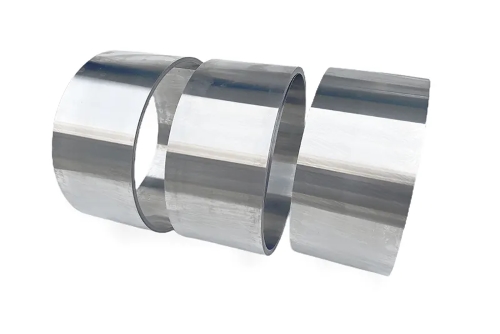
Nitinol, a unique alloy of nickel and titanium, has garnered widespread attention in the medical industry for its remarkable properties and its ability to revolutionize medical devices. Nitinol strips, in particular, have proven to be a game-changer in a variety of medical applications, ranging from stents and guidewires to orthodontic archwires.
Biocompatibility and Shape-Memory Effect
Nitinol's exceptional properties set it apart from other materials used in medical devices. One of its most notable features is the shape-memory effect. When subjected to heat, Nitinol can be deformed at lower temperatures but will return to its original shape when heated above a specific transition temperature, typically around 37°C—human body temperature. This unique characteristic is especially valuable in minimally invasive medical procedures, where devices must be small enough to navigate through the body but capable of expanding to their intended size once in place.
Moreover, Nitinol is highly biocompatible, meaning it is not only safe for long-term contact with human tissues but also reduces the risk of rejection or adverse reactions when implanted. This is particularly crucial in medical devices that remain inside the body for extended periods, such as stents or guidewires. Nitinol's resistance to corrosion ensures its durability and reduces the likelihood of complications, making it an ideal choice for critical medical applications.
Nitinol in Stents: A Lifesaving Application
One of the most groundbreaking uses of Nitinol strips in medical devices is in the production of vascular stents. A vascular stent is a small mesh tube that is inserted into blood vessels to treat conditions such as arterial blockages caused by atherosclerosis. Traditionally, stents were made from stainless steel, but Nitinol's superior properties have led to its widespread adoption in this application.
The shape-memory effect of Nitinol is particularly beneficial in stents. Nitinol stents can be inserted into a narrowed artery in a collapsed form, and once in place, they expand and conform to the vessel's shape, helping to keep the artery open. This is critical because the stent must be able to withstand the high pressures within the vascular system and maintain its form without causing irritation to the surrounding tissue.
Nitinol's ability to recover its original shape after deformation also minimizes the risk of stent recoil, which can occur with other materials when the stent shrinks back to its original size after being deployed. This ensures better results for patients and fewer complications post-surgery.
Moreover, Nitinol stents have improved flexibility, making them easier to deploy through catheters. This allows for minimally invasive procedures, reducing recovery time and minimizing the risk of complications for the patient. In addition to these mechanical benefits, Nitinol's biocompatibility ensures that the stent can remain in the body for extended periods without inducing an immune response or causing complications like clotting.
Nitinol in Guidewires: Precision and Flexibility
Another area where Nitinol strips have made a significant impact is in the field of guidewires. Guidewires are used in medical procedures to guide the placement of catheters, stents, and other devices through the body's blood vessels. These wires need to be highly flexible, extremely strong, and precise in order to navigate the complex paths of the human vascular system.
Nitinol's flexibility and superelasticity—its ability to return to its original shape when deformed—make it the ideal material for guidewires. The material can bend and flex with ease without breaking, and it is also resistant to fatigue, meaning it can withstand repeated stress without losing its mechanical properties. This durability is crucial in long, complex procedures where the guidewire may be subjected to bending and twisting.
Additionally, the shape-memory effect of Nitinol ensures that the guidewire can return to its intended shape once deployed, providing enhanced accuracy and control during procedures. This allows for more precise navigation through narrow or tortuous vessels, which is critical in minimally invasive surgeries.
Nitinol in Orthodontic Archwires: Comfort and Effectiveness
Beyond the cardiovascular and surgical fields, Nitinol strips are also making waves in dentistry, particularly in the production of orthodontic archwires. Orthodontic treatment involves the use of braces to align and straighten teeth, and the archwires play a central role in guiding the teeth into the desired position. Traditional orthodontic wires were typically made of stainless steel, but Nitinol offers several advantages.
Nitinol's shape-memory effect and superelasticity are beneficial in orthodontics. Nitinol archwires can exert a constant, gentle force on teeth, which gradually moves them into place over time. Unlike stainless steel, which can be stiff and require more force to adjust, Nitinol archwires provide a more comfortable experience for the patient by reducing the pain and discomfort commonly associated with orthodontic treatment.
Additionally, Nitinol wires can maintain their shape even after being deformed, ensuring that they can continue to apply a consistent amount of force over the long term. This makes them ideal for patients who need extended treatment times.
Nitinol in Implants: Biocompatibility and Fatigue Resistance
Nitinol's biocompatibility, fatigue resistance, and shape-memory effect make it an excellent choice for a wide range of implants. Implants such as bone staples, orthopedic devices, and dental implants require materials that can endure significant mechanical stress while maintaining their structural integrity over time. Nitinol's resistance to fatigue ensures that it can withstand the repetitive loading and unloading that occurs in the body, making it ideal for long-term use in weight-bearing joints or structures.
In orthopedic implants, Nitinol is often used for bone fixation devices and fracture repair plates. These devices must conform to the shape of the bone while remaining durable enough to support the healing process. Nitinol strips, thanks to their shape-memory effect, can conform to the shape of the bone and provide a gentle, consistent force to encourage healing. This makes Nitinol an invaluable material for enhancing the performance and longevity of orthopedic implants.
Related reading: Nitinol - Amazing Shape Memory Alloy
Summary Table
|
Application |
Key Features |
Benefits |
Common Medical Uses |
|
Stents |
Shape-memory effect, biocompatibility, corrosion resistance, superelasticity |
Expands to fit vessel, maintains structure, reduces risk of stent recoil, biocompatible for long-term use |
Vascular stents, coronary artery stents |
|
Guidewires |
Flexibility, shape-memory effect, fatigue resistance |
Enhances precision, flexibility for navigating vessels, superelasticity for repeated use |
Cardiac procedures, endovascular surgeries |
|
Orthodontic Archwires |
Shape-memory effect, superelasticity, consistent force application |
Provides constant, gentle force for tooth movement, reduces patient discomfort during treatment |
Braces and dental alignment |
|
Orthopedic Implants |
Biocompatibility, fatigue resistance, shape-memory effect |
Long-term durability, adapts to bone shape, supports healing, reduces fatigue stress on bone |
Bone fixation devices, fracture repair |
|
Dental Implants |
Biocompatibility, fatigue resistance, shape-memory effect |
Durable, long-lasting, adapts to bone, provides gentle support for bone healing |
Dental bone staples, implants |
Conclusion
Nitinol strips are poised to continue playing a transformative role in the medical field. With their unique biocompatibility, shape-memory effect, superelasticity, and fatigue resistance, Nitinol is at the forefront of improving minimally invasive surgeries and medical devices. Whether used in vascular stents, guidewires, orthodontic archwires, or implants, Nitinol's remarkable properties allow for more effective, precise, and comfortable treatments for patients. For more nitinol products, please visit Advanced Refractory Metals (ARM).
REVIEWS
{{viewsNumber}}
Thought On "{{blogTitle}}"

{{item.name}}
{{item.created_at}}
{{item.content}}
LEVE A REPLY
Comment
Name
*
Email
*
{{item.children[0].name}}
{{item.children[0].created_at}}
{{item.children[0].content}}
{{item.name}}
{{item.created_at}}
{{item.content}}
More Replies
LEAVE A REPLY
Comment
*
Name
*
Email
*
SUBSCRIBE OUR NEWSLETTER
Your Name
*
Your Email
*
Success ! You're now subscribed
You've been successfully subscribed! Check your inbox soon for great emails from this sender.
Our Latest News
Tel : (949) 407-8904
Address : 1940 East Deere Avenue, Suite 100, Santa Ana, CA 92705, U. S. A
Metals

Useful Links
Featured Posts