





Niobium Metal vs. Other Refractory Metals: Strengths and Applications
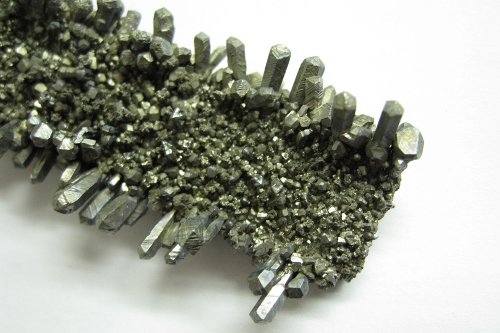
Refractory metals are a unique class of metals defined by their exceptionally high melting points, excellent mechanical strength at elevated temperatures, and strong resistance to wear, corrosion, and chemical attack. Among them, niobium has gained prominence for a combination of properties that make it highly versatile in aerospace, electronics, superconducting, and chemical industries. Comparing niobium with other refractory metals highlights both its unique strengths and its ideal applications in modern technology.
[1]
Key Properties of Niobium Metal
Niobium is a transition metal with an atomic number of 41 and a melting point of 2,468 degrees C. It is one of the refractory metals that has the characteristic of melting at extremely high temperatures. Its characteristics include:
- Low density (8.57 g/cm³), which compares poorly with tungsten at 19.3 g/cm³ and tantalum at 16.7 g/cm³. That makes tantalum good for situations where
- High ductility and formability, both at normal and elevated temperatures, for wire, sheets, and tubes.
- Superconductivity below 9.2 K, making niobium the material of choice for the production of superconducting magnets, MRI machines, and particle accelerators
- Corrosion resistance, especially against acids such as sulfuric and hydrochloric acid, at the same level as that of tantalum.
Its low density, high melting point, and excellent corrosion resistance thus provide niobium with a very distinctive market position among the refractory metals.
Comparison with Other Refractory Metals
|
Metal |
Melting Point (°C) |
Density (g/cm³) |
Strength at High Temp |
Corrosion Resistance |
Key Advantages |
|
Niobium (Nb) |
2,468 |
8.57 |
Good |
Excellent in acids |
Low density, superconductivity, ductility |
|
Tantalum (Ta) |
3,017 |
16.7 |
Good |
Exceptional |
Highly corrosion resistant, biocompatible |
|
Molybdenum (Mo) |
2,623 |
10.28 |
Very good |
Moderate |
High strength, inexpensive |
|
Tungsten (W) |
3,422 |
19.3 |
Excellent |
Moderate |
Extremely high melting point and hardness |
|
Rhenium (Re) |
3,180 |
21.0 |
Excellent |
Moderate |
High-temperature creep resistance, alloys for turbines |
From the above comparison, the following key points may be noted:
- Density Advantage: Niobium is considerably lighter than tantalum, tungsten, and rhenium. This makes the element attractive for aerospace/transportation industries, where weight reduction is an issue.
- Workability: Unlike tungsten and molybdenum, niobium has the advantage that, while tungsten and molybdenum are relatively brittle at room temperature, niobium
- Superconductivity: The level of superconductivity exhibited by niobium is unmatched by any other commonly used refractory metals.
- Corrosion Resistance: Niobium has excellent chemical performance, similar to that of tantalum but with lower cost and better machinability.
Related reading: Niobium-Contained Superconducting Materials and Their Applications
Applications of Niobium Metal
1. Aerospace and High-Temperature Alloys
Niobium is used as an alloying element for nickel-based superalloys used in jet engines, gas turbines, and rocket engines. The introduction of niobium as an alloying element improves creep properties and high-temperature properties without increasing weight. The superalloys containing niobium allow turbines to operate at higher temperatures.
2. Superconducting Materials
The niobium-based superconducting alloys include niobium titanide (NbTi) and niobium tin (Nb3Sn). They are at the core of MRI machines, particle accelerators, fusion reactors, and even in the devices required for quantum computing processes. The ability of niobium to retain its superconducting properties in high magnetic fields and low temperatures is unparalleled.
3. Electronics and Capacitors
Niobium is used in electrolytic capacitors instead of tantalum. In fact, niobium capacitors show high capacitance, thermal stabilities, and cost advantages with excellent corrosion resistance in demanding conditions.
4. Chemical Processing and Corrosion-Resistant Equipment
Because of its high resistance to acids, niobium is used for chemical reactor vessels, heat transfer equipment, and tubing where highly corrosive chemical environments are found. Tantalum is also suitable for these applications. However, niobium may be offered as a cost-effective solution to the problem.
5. Emerging Applications
- Additive manufacturing: Niobium powders and alloys are being explored for 3D printing high-performance components.
- Energy storage: Niobium oxides and composites are under research for lithium-ion battery anodes, providing improved stability and cycle life.
- Medical devices: While tantalum dominates, niobium's biocompatibility allows niche use in implants and prosthetics.
Related reading: 10 Important Uses of Niobium
Comparative Applications of Niobium and Other Refractory Metals
|
Metal |
Key Industrial Applications |
Strengths |
Limitations |
|
Niobium (Nb) |
Aerospace superalloys, superconducting magnets (MRI, particle accelerators), electrolytic capacitors, chemical process equipment, additive manufacturing, niche medical implants |
Lightweight, ductile, good high-temp strength, corrosion resistant, superconducting |
Melting point lower than W/Ta, oxidizes at high temp, moderately costly |
|
Tantalum (Ta) |
Chemical reactors, surgical implants, high-end capacitors |
Exceptional corrosion resistance, biocompatible, high melting point |
Dense and heavy, expensive, limited availability |
|
Molybdenum (Mo) |
Furnace components, electrical contacts, industrial alloying |
Very high melting point, high strength at elevated temperatures, cost-effective |
Brittle at room temp, moderate corrosion resistance |
|
Tungsten (W) |
High-temp filaments, cutting tools, aerospace heat shields, armor-piercing munitions |
Extremely high melting point, very high hardness, stable at extreme temps |
Very dense, difficult to machine, brittle at room temp |
|
Rhenium (Re) |
Jet engine superalloy additives, high-temp thermocouples, catalytic applications |
Exceptional creep and high-temp strength, stable in extreme environments |
Extremely expensive, rare, dense |
Conclusion
Niobium metal holds a distinctive position among refractory metals. Its low density, high ductility, corrosion resistance, and superconducting properties make it highly versatile, bridging applications from aerospace and high-temperature alloys to electronics and chemical processing. Compared to tantalum, tungsten, molybdenum, and rhenium, niobium offers a unique combination of workability, performance, and cost-effectiveness, particularly where weight, formability, and superconductivity are critical factors. For more niobium products, please check Advanced Refractory Metals (ARM).
Reference:
[1] Niobium. (2025, August 3). In Wikipedia.
REVIEWS
{{viewsNumber}}
Thought On "{{blogTitle}}"

{{item.name}}
{{item.created_at}}
{{item.content}}
LEVE A REPLY
Comment
Name
*
Email
*
{{item.children[0].name}}
{{item.children[0].created_at}}
{{item.children[0].content}}
{{item.name}}
{{item.created_at}}
{{item.content}}
More Replies
LEAVE A REPLY
Comment
*
Name
*
Email
*
SUBSCRIBE OUR NEWSLETTER
Your Name
*
Your Email
*
Success ! You're now subscribed
You've been successfully subscribed! Check your inbox soon for great emails from this sender.
Our Latest News
Tel : (949) 407-8904
Address : 1940 East Deere Avenue, Suite 100, Santa Ana, CA 92705, U. S. A
Metals

Useful Links
Featured Posts