





Molybdenum Plates for High-Temperature Furnaces and Heat Treatment Equipment
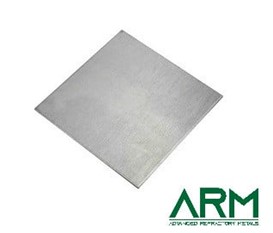
In the world of high-temperature industry, the extreme conditions inside equipment are often the biggest bottleneck holding back productivity and equipment life. When furnace temperatures climb above 1300°C, ordinary metals quickly soften, warp, or even melt — leading to frequent breakdowns and sky-high maintenance costs. So what material can actually stay stable and reliable in this kind of environment?
The answer is molybdenum plates. This high-temperature structural material, made from molybdenum metal, has become an essential core component in modern high-temperature furnaces and heat treatment equipment, thanks to its outstanding heat resistance and mechanical stability.
What High-Temperature Furnaces and Heat Treatment Equipment Demand
Heat treatment equipment faces a bunch of tough challenges in real operation, which puts some serious demands on materials.
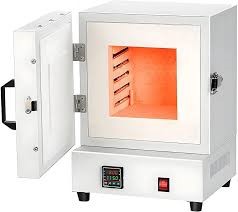
Extreme temperatures
The working temperature inside a high-temperature furnace is typically between 1300°C and 1600°C. Some special processes even go above 1800°C. Regular carbon steel would have melted long before reaching these temps. Even common stainless steel loses all its structural strength.
Rapid temperature changes
Heat treatment usually involves cycles of heating up, holding, and cooling down. The material has to withstand repeated thermal shock and thermal fatigue. If the thermal expansion coefficient is too high, the material will expand and contract a lot, creating thermal stress that leads to warping or cracking.
Load and creep challenges
Whether it's a furnace liner, load-bearing support, or sintering tray, the material has to handle mechanical loads for long periods at high temperatures. Ordinary materials start to creep under those conditions — that means they slowly and continuously deform under constant stress, eventually leading to equipment failure.
Corrosive atmospheres
Many heat treatment processes run in vacuum, hydrogen, inert gas, or even corrosive atmospheres. The material needs good chemical stability to avoid surface contamination or performance loss.
Why Molybdenum Plates Are a Great Fit
Molybdenum plates have become the go-to choice for high-temperature furnaces and heat treatment equipment because of a unique combination of properties.
1. Ultra-High Melting Point and High-Temperature Strength
Molybdenum has a melting point of 2620°C. It still holds onto good strength and hardness even at temperatures below 1600°C. That means even in a temperature range where most metals have already softened, molybdenum plates keep a stable solid structure without obvious warping.
Even more impressive, molybdenum's mechanical properties at high temperatures blow traditional heat-resistant alloys out of the water. At 980°C, its creep strength is about 17.5 kg/mm², which is higher than conventional heat-resistant alloys. Plus, molybdenum's Young's modulus at 870°C is still 1.3 times that of carbon steel at room temperature.
2. Low Thermal Expansion Coefficient
Molybdenum's thermal expansion coefficient is only 5.5×10⁻⁶/°C — about one quarter that of Fe-Cr-Ni alloys. This is a big deal. During rapid temperature changes, molybdenum plates barely change size from expansion and contraction. That helps reduce thermal stress and keeps the equipment fitting together properly through heating and cooling cycles.
3. Excellent Creep Resistance
By adding small amounts of rare earth elements, like lanthanum or cerium, or carbide reinforcements, like titanium carbide or zirconium carbide, the grain structure of high-temperature molybdenum plates gets further optimized. This effectively prevents grain coarsening at high temperatures. Test data shows that after running for 100 hours at 1200°C, the tensile strength of these optimized molybdenum plates still stays between 220 and 250 MPa.
Some molybdenum plates made with special processes can keep their shape even at ultra-high temperatures above 1850°C — good enough for demanding applications like sapphire growth furnaces.
4. Good Electrical and Thermal Conductivity
Molybdenum conducts heat really well, so heat spreads quickly and evenly through the plate. This is especially important in applications like electronic component sintering and vacuum coating, where it helps avoid localized overheating and keeps the process stable.
5. A Weakness to Keep in Mind
To be fair, molybdenum plates do have one notable drawback: poor high-temperature oxidation resistance. In an oxygen-rich environment above 490°C, molybdenum oxidizes quickly and forms volatile molybdenum trioxide (MoO₃), which causes the material to continuously waste away. That's why molybdenum plates for high-temperature furnaces must be used in vacuum, hydrogen, or inert gas atmospheres — or be protected with an oxidation-resistant coating.
Advanced Refractory Metals (ARM) Offers Molybdenum Plates
Among the many suppliers of molybdenum materials, Advanced Refractory Metals (ARM) has built a reputation as a trusted partner for manufacturers of high-temperature furnaces and heat treatment equipment, thanks to its broad product line and reliable quality control.
Available Sizes and Fabrication Capabilities
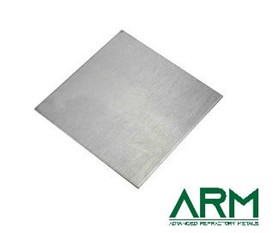
ARM offers molybdenum plates in a variety of sizes to meet different application needs:
|
Thickness Range (inches) |
Max Width (inches) |
Max Length (inches) |
Thickness Tolerance |
|
0.090 - 0.200 |
30 |
114 |
+/- 0.008 |
|
0.200 - 0.250 |
24 |
84 |
+/- 2% |
|
0.250 - 0.500 |
24 |
42 |
+/- 2% |
|
>0.500 |
24 |
— |
+/- 2% |
Molybdenum plate surfaces can be finished in bright, matte, satin, or as-rolled conditions to suit different downstream processing and usage requirements.
Product Line Overview
Beyond standard molybdenum plates, ARM offers various specifications of molybdenum products, including plates ranging from 0.187 inches to 1.25 inches in thickness, with common sizes like 12 inches by 36 inches. The company also offers custom fabrication based on customer drawings and technical requirements.
Quality Assurance
ARM follows strict quality control standards to ensure consistent purity and performance in its molybdenum plates. Whether used for furnace liners, heat treatment trays, or semiconductor sintering fixtures, ARM's molybdenum plates deliver reliable service life under extreme conditions.
Conclusion
The demanding requirements of high-temperature furnaces and heat treatment equipment make molybdenum plates an irreplaceable high-performance solution. Their ultra-high melting point, excellent high-temperature strength, low thermal expansion coefficient, and good creep resistance all work together to create a solid technical moat for molybdenum plates in this field.
REVIEWS
{{viewsNumber}}
Thought On "{{blogTitle}}"

{{item.name}}
{{item.created_at}}
{{item.content}}
LEVE A REPLY
Comment
Name
*
Email
*
{{item.children[0].name}}
{{item.children[0].created_at}}
{{item.children[0].content}}
{{item.name}}
{{item.created_at}}
{{item.content}}
More Replies
LEAVE A REPLY
Comment
*
Name
*
Email
*
SUBSCRIBE OUR NEWSLETTER
Your Name
*
Your Email
*
Success ! You're now subscribed
You've been successfully subscribed! Check your inbox soon for great emails from this sender.
Our Latest News
Tel : (949) 407-8904
Address : 1940 East Deere Avenue, Suite 100, Santa Ana, CA 92705, U. S. A
Metals

Useful Links
Featured Posts