





Different Types of Crucibles: What They're Good for and How to Choose
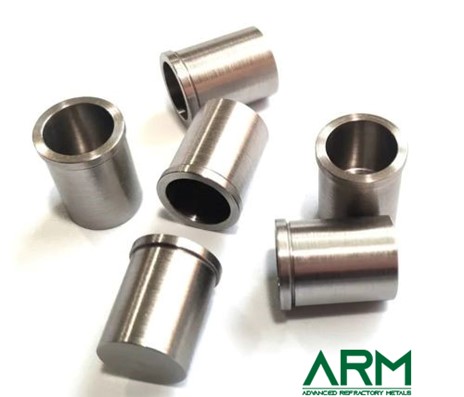
A crucible is a special container used to melt metal materials at very high temperatures. Once the metal is melted, you can cast it into new shapes or use it to make new alloys. Since crucibles are used for melting at high heat, the material they're made from has to have a higher melting point than the metal you're melting.
Quick Overview
To save you time, here's a cheat sheet of common crucible types, their key features, and where they're typically used.
|
Type |
Features |
Applications |
|
Tungsten |
Melting point 3422°C, corrosion resistant |
Rare earth smelting, sapphire crystal growth, quartz glass melting, electron beam spraying |
|
Molybdenum |
Melting point 2610°C, low contamination, more affordable |
Sapphire crystal growth, rare earth smelting, vacuum coating, semiconductor material prep |
|
Ceramic |
Strong corrosion resistance |
Chemical analysis, precious metal melting, superalloy melting, glass manufacturing |
|
Silicon Carbide |
High hardness, fast heat transfer |
Non-ferrous metal (copper, aluminum, zinc) melting, lithium battery material sintering |
|
Clay Graphite |
Won't contaminate metals, great value |
Melting copper, copper alloys, and light alloys (aluminum, magnesium, etc.) |
|
Steel |
Low cost, but oxidizes easily, rusts, and can contaminate alloys |
Melting low-melting-point metals like tin, lead, zinc, aluminum |
Different types of crucibles are used for all kinds of things—research, experiments, chemical analysis, industrial testing, quality control, and even academic work.
Tungsten Crucible
The biggest advantage of a tungsten crucible is its insane heat resistance. With a melting point of 3,422°C—the highest among all known metals—it can handle temperatures above 2,000°C and even up to 3,000°C. In a vacuum or inert gas atmosphere, tungsten crucibles are chemically stable and barely introduce any impurities into the melt, which keeps your product pure. The catch? Tungsten oxidizes really easily at high temperatures, so you have to use it in a vacuum or an inert gas (like argon) to keep it from degrading.
Thanks to its ultra-high temperature tolerance, it's used in rare earth smelting, growing sapphire substrate crystals, continuous melting of high-purity quartz glass, and electron beam spraying—pretty high-tech stuff.
Tungsten Crucible (High Purity)
Molybdenum Crucible
Molybdenum crucibles also perform well at high temperatures. Not quite as extreme as tungsten, but with a melting point of 2,610°C, they're more than enough for most high-temperature processes. Plus, compared to tungsten, molybdenum is less dense and more affordable while still delivering excellent performance. Just like tungsten, molybdenum needs to be used in a vacuum or a reducing/inert atmosphere. It has good thermal conductivity and is chemically inert toward most molten metals and compounds.
One of the most famous uses for molybdenum crucibles is in sapphire single-crystal growth furnaces. They're also widely used in rare earth smelting, vacuum coating, and semiconductor material preparation.
Ceramic Crucibles
Ceramic crucibles cover a few different types:
- Alumina crucibles – The most common type. They're hard, mechanically strong, and can handle temperatures up to 1,650–1,800°C. Chemically stable. Great for melting superalloys and non-ferrous metals.
- Zirconia crucibles – Even better temperature resistance, up to 2,700°C, and extremely resistant to chemical corrosion. Often used for melting precious metals like platinum, rhodium, and palladium and their alloys.
- Quartz crucibles – Ultra-high SiO₂ purity (>99.9%). They're the standard container for pulling single-crystal silicon in the semiconductor industry. Temperature limit is around 1,450°C. Be careful—they're easily corroded by hydrofluoric acid and strong bases.
- Boron nitride (BN) crucibles – Good thermal conductivity, high chemical stability, and can handle temperatures above 1,800°C. Widely used in semiconductor manufacturing and high-temperature smelting.
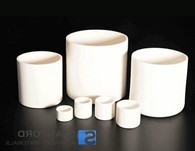
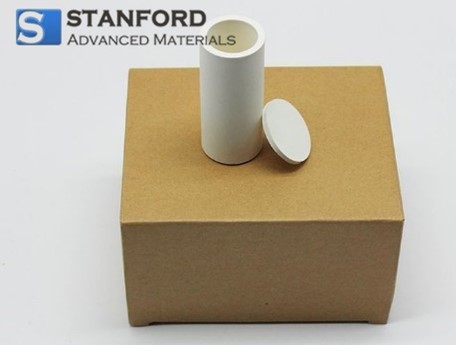
Alumina Crucible Al2O3 Zirconia Crucible
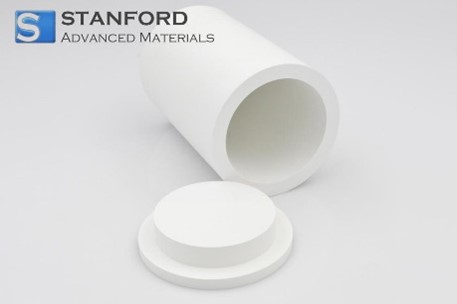
Quartz Crucible Hot Pressed Boron Nitride Crucible
Silicon Carbide Crucible
Silicon carbide crucibles pack a bunch of benefits: high hardness, wear resistance, fast heat transfer, good thermal shock stability, and resistance to strong acids and alkalis. They can handle temperatures above 1,600°C. When melting non-ferrous metals, they last 3–5 times longer than regular graphite crucibles—great value for money. They're mainly used for melting non-ferrous metals like copper, aluminum, and zinc, sintering lithium battery anode materials, and as corrosion-resistant containers in the chemical industry.
Clay Graphite Crucible
Clay graphite crucibles are made from natural flake graphite and refractory clay. This combination gives them excellent thermal shock resistance (they can handle rapid heating and cooling) and high thermal conductivity. Graphite is "non-wetting" to most molten metals, so the crucible material won't stick to or contaminate the melt. They typically work in the 1,200–1,600°C range.
They're mainly used for casting copper alloys (like brass and bronze) and light alloys (like aluminum and magnesium). While silicon carbide crucibles are replacing them in some areas, clay graphite crucibles are still the go-to choice in many traditional foundries.
Steel Crucible
Steel crucibles are usually made from stainless steel or similar. They don't crack as easily as ceramic ones. But they don't handle high heat well—they oxidize quickly, scale up, and the iron content can contaminate the melt. So they're only good for melting low-melting-point metals like aluminum, zinc, tin, and lead. They're also sometimes used for chemical experiments that don't need high heat, or for mixing and drying certain materials.
In the End
So, which of these crucibles are you thinking about using? Whether you want to learn more about crucibles or need one in a custom size, just reach out to Advanced Refractory Metals (ARM). Contact ARM to Inquiry.
REVIEWS
{{viewsNumber}}
Thought On "{{blogTitle}}"

{{item.name}}
{{item.created_at}}
{{item.content}}
LEVE A REPLY
Comment
Name
*
Email
*
{{item.children[0].name}}
{{item.children[0].created_at}}
{{item.children[0].content}}
{{item.name}}
{{item.created_at}}
{{item.content}}
More Replies
LEAVE A REPLY
Comment
*
Name
*
Email
*
SUBSCRIBE OUR NEWSLETTER
Your Name
*
Your Email
*
Success ! You're now subscribed
You've been successfully subscribed! Check your inbox soon for great emails from this sender.
Our Latest News
Tel : (949) 407-8904
Address : 1940 East Deere Avenue, Suite 100, Santa Ana, CA 92705, U. S. A
Metals

Useful Links
Featured Posts